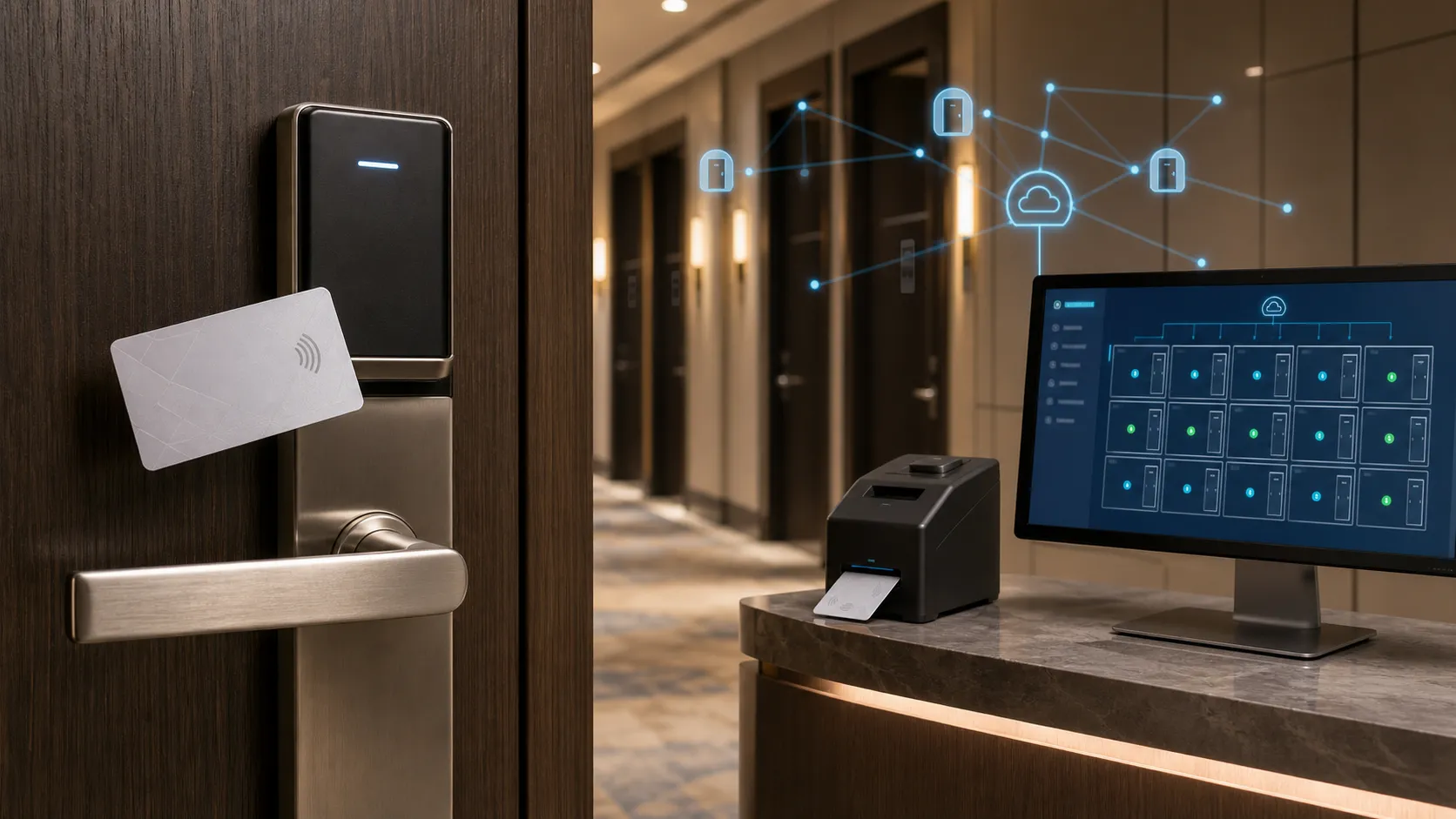
A hotel door lock system is more than a collection of electronic handles. It is an operating system for guest rooms, staff access, shared facilities and emergency procedures. The locks, credentials, encoder, management software, door hardware and maintenance plan must work together.
In one sentence: An RFID hotel door lock system allows authorized key cards or compatible credentials to activate selected locks for a defined access scope and time period, while the management process controls issuance, cancellation and staff permissions.
This guide explains the system as a project—not just a product—so hotel owners, contractors, distributors and procurement teams can prepare a more accurate request for quotation.
Start with the Property, Not the Lock Catalog
Before comparing finishes or models, create a door schedule.
| Area |
Typical users |
Access question |
| Guest rooms |
Current guest, assigned staff, emergency manager |
Who can enter, and during which stay period? |
| Main entrance |
Guests, staff, visitors |
Is access unrestricted, scheduled or credential-controlled? |
| Elevator or floor |
Guests assigned to selected floors |
Does the project require floor permissions? |
| Gym, pool or lounge |
Eligible guests and staff |
Should room credentials also open amenities? |
| Storage and service rooms |
Authorized staff |
Are role-based or time-based permissions required? |
| Back office |
Managers and selected employees |
Is a separate staff credential policy needed? |
| Emergency access |
Authorized management |
How will controlled override access work? |
This simple map defines the number of locks, credential types, staff roles and accessories more accurately than a room count alone.
Haolock’s swipe card smart lock range is intended for hotels, guesthouses, apartments and other room-management projects. Buyers should confirm the complete system configuration for their property rather than assuming every card lock uses the same credential or software.
The Core Components of a Hotel Door Lock System
1. Electronic Hotel Door Locks
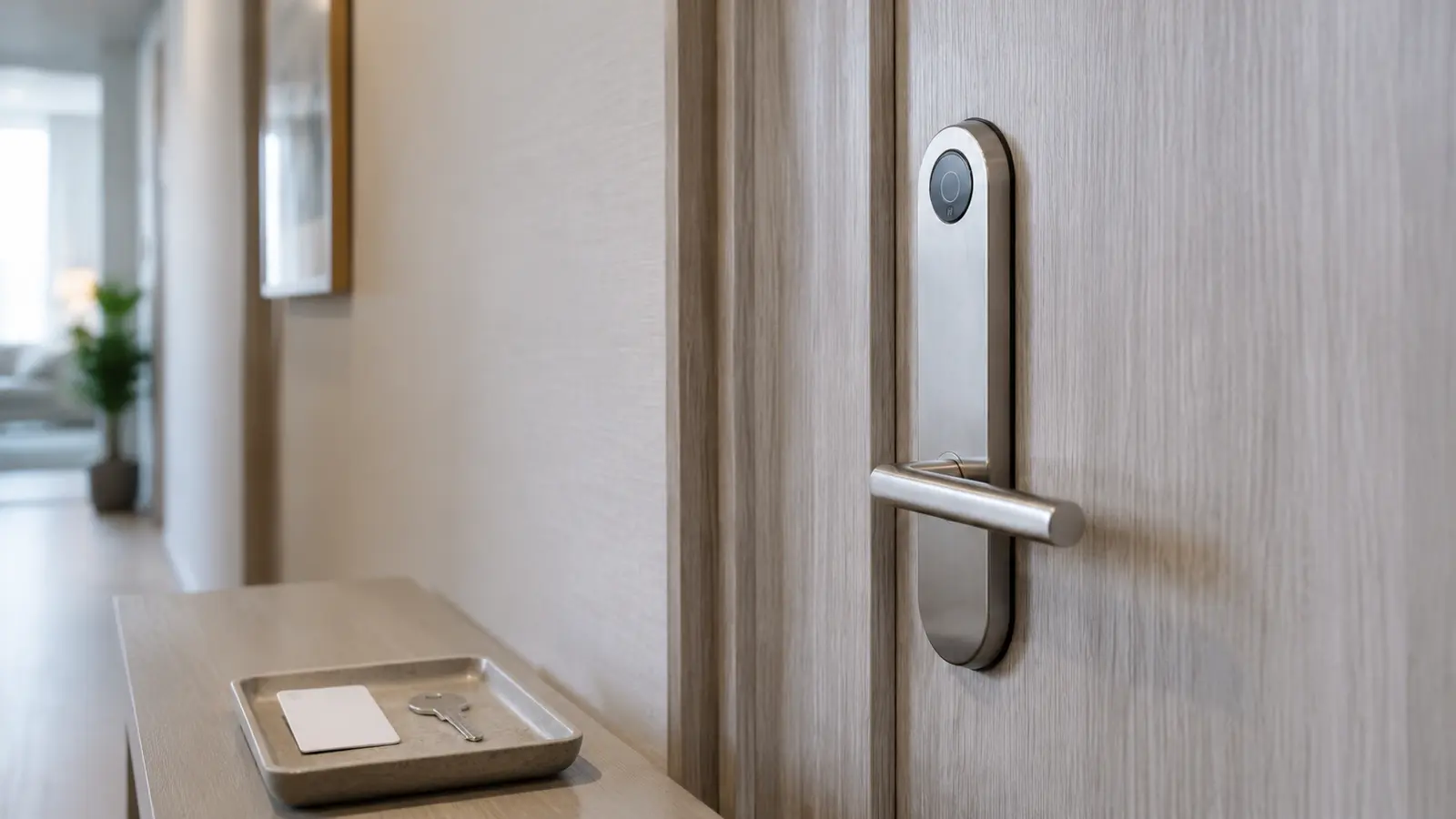
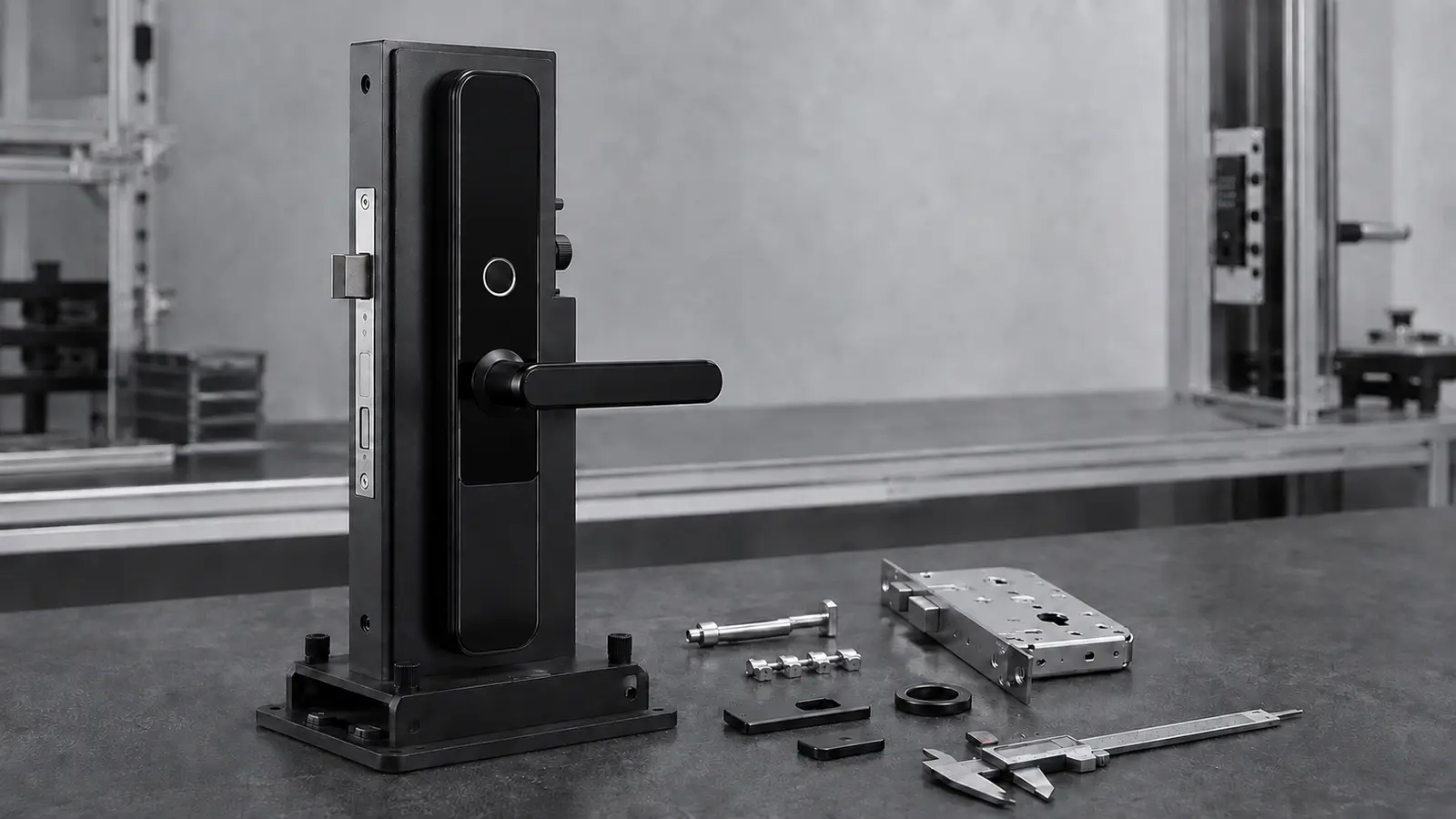
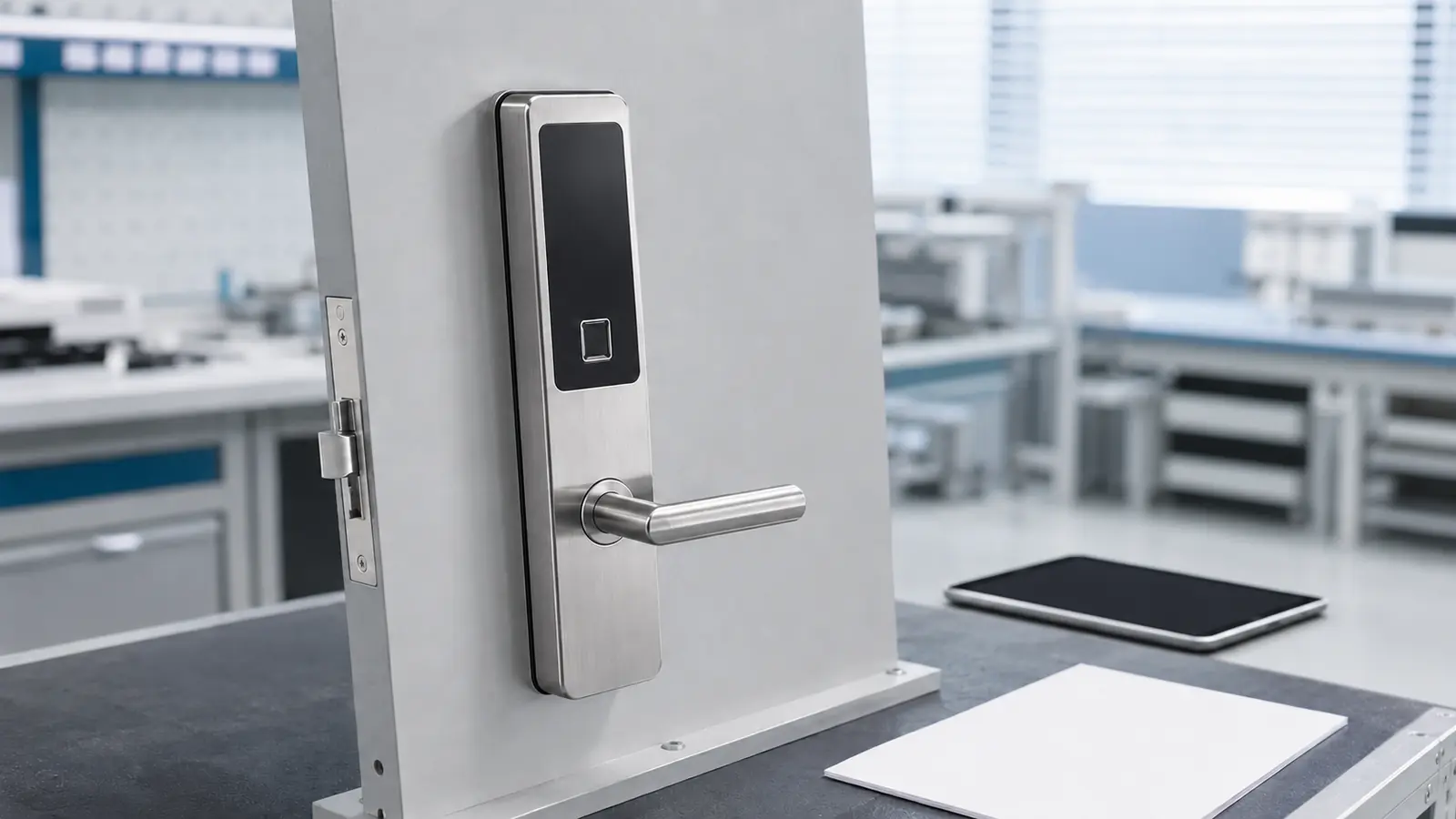
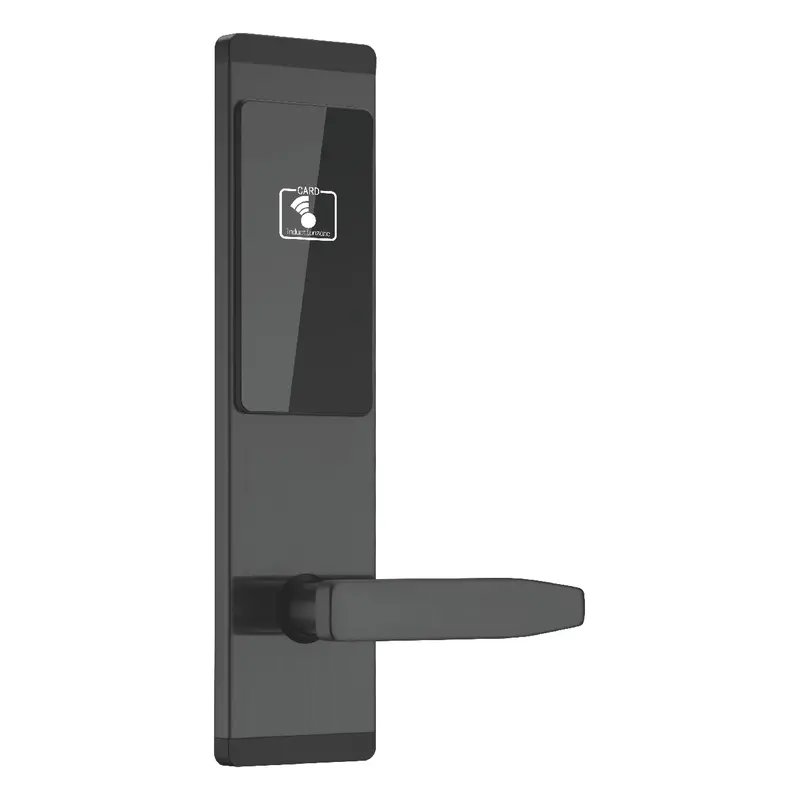
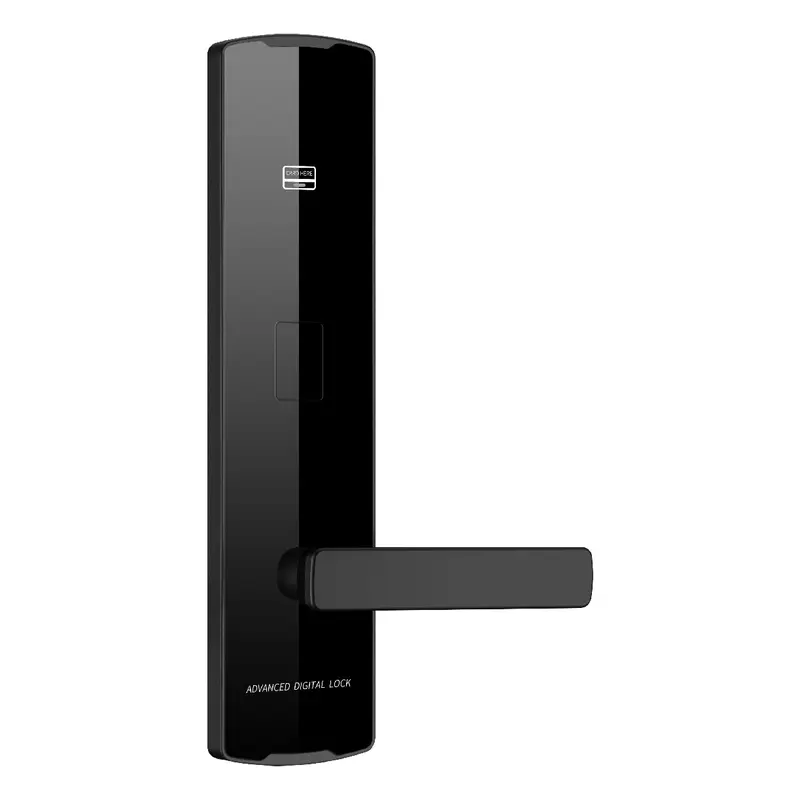
Each door lock combines the exterior reader and handle with an interior mechanism, lock body, battery compartment and emergency-access design. The selected model must match the door’s thickness, material, opening direction and preparation.
For example, Haolock’s New9015 Black Swipe Card Lock uses a stainless-steel body with a brushed finish, while the 2112 Black Swipe Card Lock is listed with an aluminum-oxide profile and anodized finish. These material and dimension differences affect appearance and installation planning; they do not replace a full system-compatibility check.
2. Guest and Staff Credentials
Credentials may include RFID cards, other card technologies, wristbands or mobile credentials, depending on the system.
A guest credential normally needs access to an assigned room for a defined stay. A staff credential may require access to a group of rooms during a work shift. Manager or emergency credentials require stricter control.
The exact card technology matters. The NXP MIFARE DESFire EV3 platform, for example, supports ISO/IEC 14443 Type A contactless communication and modern cryptographic options. This does not mean every hotel card lock uses DESFire EV3. Buyers must verify the reader technology, card type, frequency, encoding method and security level supported by the proposed system.
3. Card Encoder or Issuing Device
The front desk uses an encoder or issuing device to prepare credentials. The workflow should allow authorized staff to assign a room, define validity and replace a lost card.
Confirm:
- supported credential technology;
- connection method;
- driver and software compatibility;
- number of encoders required;
- operator permissions;
- replacement availability;
- training and troubleshooting procedure.
4. Management Software
The management platform controls rooms, users, validity periods and administrator roles. Some projects operate locally; others use networked or cloud management.
Industry systems may also connect credential management with property management software. For example, dormakaba describes hotel access management as a combination of software, RFID encoders, programming or auditing tools, locks, credentials and optional PMS interfaces. This illustrates why buyers should specify the whole workflow, even when selecting a different supplier.
5. Programming and Audit Tools
Offline locks may require a portable device or service process for initialization, time synchronization, diagnostics or audit retrieval. Online systems may provide more centralized status and event functions.
Ask exactly which events are stored, how they are retrieved, how long they are retained and who is allowed to review them.
6. Mechanical and Electrical Accessories
A complete quotation may need:
- mortise lock bodies;
- cylinders and emergency keys;
- door strikes;
- key cards or wristbands;
- energy-saving switches;
- card encoders;
- elevator or common-area controllers;
- programming devices;
- software licenses;
- spare locks and replacement components.
If these items are omitted from the initial bill of materials, the project may appear cheaper than its actual installed cost.
How an RFID Hotel Key Card Workflow Operates
Stage 1: Configure the Property
Rooms, doors, access zones, staff roles and system administrators are created in the management platform.
Stage 2: Prepare the Lock
The lock is installed, initialized and associated with the correct room or door. Time and configuration settings are checked.
Stage 3: Issue the Credential
At check-in, authorized staff select the room and stay period. The encoder writes or associates the permitted access data according to the system design.
Stage 4: Present the Card
The guest presents the compatible credential to the reader. The lock evaluates the credential and, if accepted, activates the opening mechanism.
Stage 5: Manage Changes
When a guest changes rooms, extends a stay or reports a lost card, front-desk staff follow the defined replacement or cancellation workflow.
Stage 6: Expire and Review
The credential expires or is removed from use. Staff may review relevant lock events when the system supports audit retrieval and when property policy permits.
Offline vs Online Hotel Lock Systems
| System approach |
Typical operation |
Advantages |
Planning questions |
| Offline electronic locks |
Each lock validates credentials locally |
Less network infrastructure at each door |
How are locks programmed, audited and time-synchronized? |
| Networked or online locks |
Locks communicate with a central platform |
Central monitoring and faster operational changes may be possible |
What network, gateway, server and maintenance infrastructure is required? |
| Hybrid system |
Local lock operation with selected online functions |
Balances door autonomy and centralized capabilities |
Which doors and events require connectivity? |
Online does not automatically mean better. A small guesthouse may value simple offline operation, while a large hotel may need centralized alerts, audit tools and integrations. The correct architecture depends on property size, staffing and risk.
RFID, Magnetic Stripe, PIN and Mobile Access
RFID Key Cards
RFID credentials are presented near the reader and do not rely on magnetic-stripe contact. The supported credential family and security configuration must be confirmed.
Magnetic-Stripe Cards
Magnetic-stripe systems require the card to pass through a reader. Existing properties may still use them, but buyers planning a new system should compare card wear, encoder availability and upgrade options.
PIN-Code Access
PIN access removes the physical guest card but creates a code-distribution and revocation process. It may suit small managed properties when temporary-password functions match the operating model.
Mobile Credentials
Mobile access can improve guest convenience, but it introduces app, phone, connectivity, integration and support requirements. Some hospitality systems use Bluetooth Low Energy with compatible RFID locks; dormakaba’s mobile-access overview is one example of this architecture.
The credential method should be selected around the property’s actual check-in process, not around a single feature.
The Procurement Checklist
Property Information
- number of guest rooms;
- number of staff and service doors;
- shared facilities and elevator access;
- new construction or retrofit;
- expected opening date;
- destination country and applicable requirements.
Door Information
- door material;
- door thickness;
- left or right opening;
- existing cutout and mortise;
- backset and center measurements;
- fire-rated or special doors;
- indoor or exposed environment;
- required handle and finish.
Access Requirements
- guest credential type;
- staff credential hierarchy;
- validity and scheduling rules;
- room-change and stay-extension workflow;
- lost-card process;
- emergency access;
- audit requirements;
- common-area and elevator permissions.
System and IT Requirements
- offline, online or hybrid architecture;
- local or cloud software preference;
- operating-system and network conditions;
- PMS or other integration requirements;
- administrator roles;
- data backup and cybersecurity responsibilities;
- software licensing and update policy.
Commercial Requirements
- project quantity;
- sample or pilot quantity;
- branding or card printing;
- packaging requirements;
- spare parts;
- installation responsibility;
- training;
- warranty and after-sales support;
- delivery destination and schedule.
A Practical Pilot Plan
Do not use the first full shipment as the first real-world test.
- Select representative doors, including the most difficult retrofit.
- Confirm measurements and opening direction.
- Install the proposed lock and lock body.
- Configure sample rooms and administrator roles.
- Issue guest, staff and emergency credentials.
- Test check-in, extension, room change and lost-card scenarios.
- Simulate low battery and verify emergency access.
- Review installation time and staff training needs.
- Document changes before approving the batch order.
A pilot is especially important when an existing hotel has different door types or when the project includes elevators, common areas or system integration.
Maintenance Is Part of the System Design
Battery Management
Record the battery specification, warning method and replacement procedure. Do not wait for guest complaints to reveal weak batteries.
Credential Control
Store blank cards securely, limit encoder access and remove former staff credentials according to policy.
Door Alignment
An electronic lock cannot compensate for a poorly aligned door, damaged hinge or binding latch. Mechanical inspection should be included in maintenance.
Software and Data
Define who manages users, backups, updates and administrator accounts. Keep an approved recovery procedure.
Spare Parts
Plan spare locks, lock bodies, encoders, cards and frequently replaced components according to project scale and supplier lead time.
Common RFQ Mistakes
Requesting “100 Hotel Locks” Without Door Data
Quantity alone is not enough to confirm fit or system configuration.
Comparing Only the Lock Price
Cards, encoders, software, accessories, installation, training and spares affect the installed cost.
Assuming All RFID Cards Are Compatible
Card frequency, chip technology, encoding and reader support must match.
Forgetting Staff and Common Areas
A room-only quotation may omit back-of-house doors, elevators, entrances and amenities.
Leaving Emergency Procedures Until Installation
Emergency access, administrator recovery and low-battery response should be defined before rollout.
Frequently Asked Questions
What is an RFID hotel door lock?
It is an electronic lock that reads a compatible contactless credential and grants or refuses access according to the system’s authorization logic.
Can one hotel key card open several doors?
It can when the system is configured to authorize those doors, such as a guest room plus eligible shared facilities. Capability depends on the proposed system.
Can a lost hotel key card be cancelled?
Modern systems normally provide a replacement or cancellation workflow, but the exact process differs between offline and online architectures. Ask the supplier to demonstrate it.
Do hotel locks work when the network is down?
Many offline locks validate credentials locally. Networked systems may also have local operating behavior. Buyers must confirm the failure mode and recovery process for the selected architecture.
How many encoders does a hotel need?
The answer depends on the number of front-desk stations, shift workflow, backup requirements and property layout. Include spare and service planning.
Can RFID locks support mobile keys later?
Some systems provide an upgrade path to Bluetooth or mobile credentials, while others do not. Confirm hardware readiness, software, gateway and licensing requirements before purchase.
Bottom Line
The best hotel door lock system is the one that fits the doors, guest journey, staff permissions, emergency procedures and maintenance capability of the property. Begin with a door and access schedule, define the credential lifecycle, confirm every system component and test a representative pilot before mass installation.
Review Haolock’s smart lock product categories and then contact Haolock with the property size, door measurements, preferred credential method, required accessories and project schedule for model-matching and quotation support.