Buyers comparing a China smart keypad door lock manufacturer should verify two things separately: whether the proposed lock fits the project, and whether the supplier can support a controlled sample-to-batch approval process. A company profile or broad product catalog cannot replace model-specific evidence. Before requesting a quotation, define the door conditions, access methods, user workflow, finish, documentation and acceptance checks. Then ask each supplier to identify the exact model and supplied configuration against the same requirements. This approach turns a general manufacturer search into a comparable sourcing decision and reduces the risk of receiving quotations based on different assumptions.
Start with the project, not the manufacturer claim
“Smart keypad door lock” describes an access concept, not a complete procurement specification. A lock can accept a password yet still be unsuitable because its body does not fit the door preparation, its credential workflow does not match the property, or the quoted configuration excludes an access method the buyer expected. Supplier evaluation therefore begins with a project brief rather than a list of promotional claims.
Record the property type, number of doors, new-build or retrofit status, door material, door thickness, opening direction, existing cutout and lock-body requirements. Add the people who will use the doors: residents, guests, staff, maintenance personnel and administrators. These inputs determine what a candidate manufacturer must confirm. They also prevent one bidder from quoting a basic password lock while another prices a password-and-fingerprint configuration with different hardware and management requirements.
Buyers can first review the available password smart lock range to understand the types of models that may be shortlisted. The category is a discovery step. Approval still depends on the exact model, configuration and project conditions.
What supplier evidence should be checked first?
A useful supplier review connects every claim to an identifiable document, sample or responsible process. The goal is not to collect the largest file package. It is to establish whether the supplier can keep the quotation, sample, production description, packing information and delivered product aligned.
| Evidence area |
What the buyer should request |
Decision it supports |
| Company scope |
Company identity, factory role, product scope and named sales or technical contact |
Whether the supplier’s stated role matches the sourcing requirement |
| Model identity |
Exact model name, product URL, finish, material and configuration on the quotation |
Whether all parties are evaluating the same lock |
| Door interface |
Dimensioned drawing, lock-body information and required door-preparation details |
Whether a sample can be installed without unapproved modification |
| Access functions |
Model-specific operating instructions and a demonstration of required credentials |
Whether the stated password, fingerprint or backup workflow is actually supported |
| Batch control |
Sample approval record, product identification method and agreed inspection points |
Whether bulk units can be checked against the approved sample |
| Delivery documents |
Packing description, item list, manuals and labeling details |
Whether installers and operators will receive the required information |
Certificates, test reports or compliance statements should be requested only when the destination market or project requires them. The buyer should identify the exact document, issuing body, product scope and required validity instead of asking generally whether a supplier is “certified.” No document should be assumed to cover a model or configuration unless its scope confirms that relationship.
How should buyers validate a proposed keypad lock model?
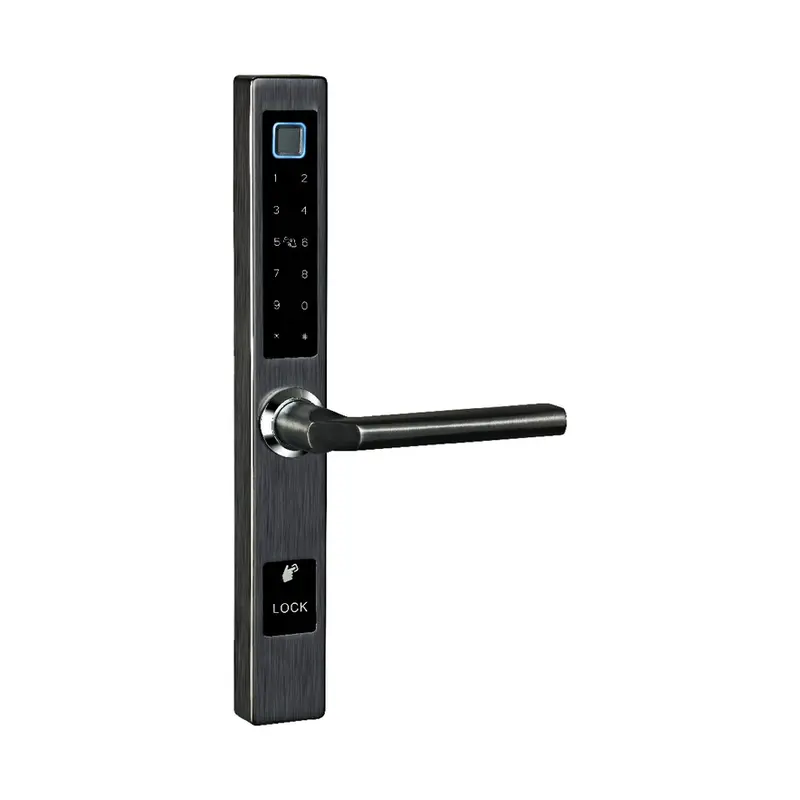
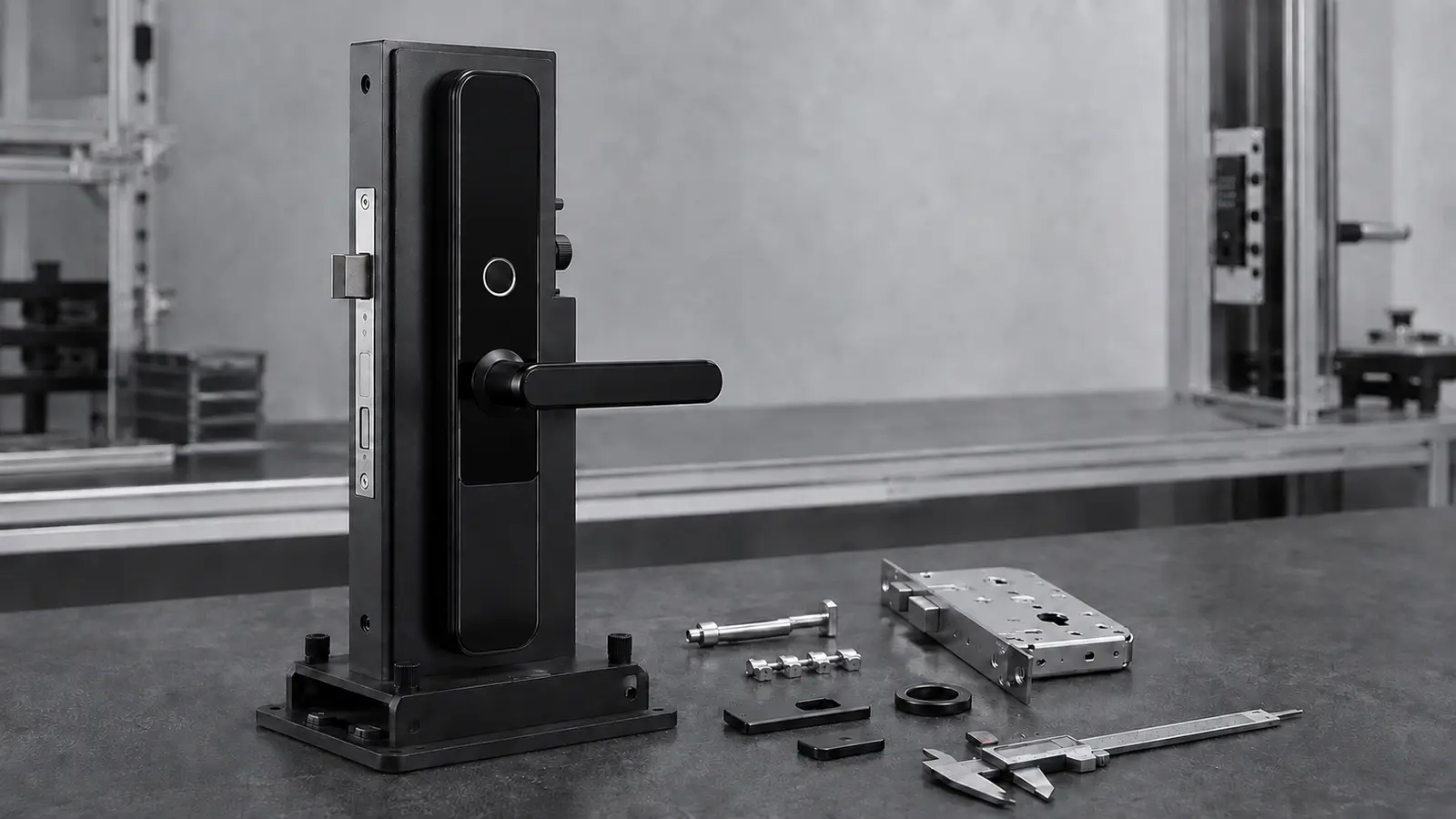
Model validation should begin with facts that can be checked before discussing optional functions. For example, Haolock lists the 1019 Black Password & Fingerprint Lock with dimensions of 310 × 40 × 20 mm, a black finish, an aluminum-alloy body and an electroplated process. These facts help identify the candidate product, but they do not prove that it fits a buyer’s door or supports every password-management behavior the project may require.
The RFQ should therefore ask the supplier to confirm the physical and functional boundary of the quoted version. Physical confirmation includes the lock-body interface, spindle and handle orientation, door thickness range, opening direction, existing cutout and required drilling. Functional confirmation includes the enabled unlocking methods, administrator procedure, credential creation and deletion, backup access, low-power response and reset behavior. If any function depends on an app, Bluetooth connection, card encoder, gateway or management software, its hardware and service boundary must be described separately.
A product name containing “password” or “fingerprint” is not enough evidence for a project workflow. Password length, user quantity, temporary-code behavior, failed-attempt response, fingerprint capacity, enrollment method and record availability can vary by configuration. Buyers should request model-specific answers and test the required actions on a sample.
The buyer should also define how model changes will be communicated. A different lock body, finish process, electronic module, accessory or operating method can affect installation and acceptance even when the commercial name looks similar. The quotation and sample record should identify the approved version, while any proposed substitution should be reviewed before production. This creates a traceable boundary without assuming that every component or revision is fixed in the same way for every supplier.
Separate door compatibility from access-control capability
Door fit and credential operation are two different approval gates. A smart lock can operate correctly on a test bench but fail to align with the project’s mortise, latch position or door preparation. Conversely, a mechanically compatible lock may still lack the role, backup or handover logic required by the operator.
For retrofit projects, send clear photographs and measured drawings of representative doors. Include both sides of the door, the edge, existing lock body, handle centerlines, door thickness and opening direction. Where a property contains several door types, create a door schedule and identify how many units belong to each type. One sample door should not be treated as proof for the whole building unless the door schedule confirms that the interfaces are identical.
For access behavior, create test cases based on real users. A resident should be able to enter through the approved method. An expired or deleted credential should be rejected. An administrator change should follow the agreed authorization process. The backup method should work under the conditions defined for it. The test record should identify the model, configuration, door type, expected result, actual result and corrective action.
Why quotation scope must be made comparable
Two quotations can look similar while covering different deliverables. One may include only the lock set; another may include cards, keys, lock bodies, installation accessories, management devices, upgraded packaging or project documents. Price comparison is unreliable until the supply boundary is normalized.
Ask each manufacturer to break out the exact lock model, color, material, enabled access methods, lock body, accessories, management components, packaging, documentation and sample requirements. State the delivery destination and trade terms needed for the quotation, but do not assume freight, taxes, installation or commissioning are included. If installation support is required, define whether this means drawings, remote guidance, training materials or on-site work.
Packaging also affects project control. The quotation should describe the number of units per carton, individual packing method, accessory placement and external identification. For multi-door projects, the buyer may also need room or door references on labels, but this should be discussed as a project requirement rather than assumed as a standard service.
Use a sample approval process that can survive bulk delivery
A sample is useful only when its approved characteristics are recorded. Photograph the exterior and supplied components, record the model identity, measure critical interfaces and list the functions tested. Keep the approved drawing, instructions and configuration description with the sample record. If a change is proposed after approval, the supplier should identify what changes, why it changes and whether another test is required.
Bulk inspection should then return to the same evidence. Check product identification, visible finish, critical dimensions, accessory completeness, packing and a defined functional sample from the batch. The inspection plan should reflect project risk; it should not create unsupported claims about universal sampling levels. Buyers can agree the method with their quality team or inspection provider before production.
The handover package matters as much as the hardware. Operators need the approved instructions, administrator transfer process, backup-access procedure and room-to-lock register where applicable. Installers need the right drawings and accessory list. Procurement needs a record that the delivered model matches the quotation and approved sample.
What should a complete RFQ contain?
A concise but complete RFQ helps a manufacturer respond with fewer assumptions. Use the following structure and attach photographs or schedules where needed:
- Project: property type, country, quantity, new-build or retrofit, and intended installation schedule.
- Door conditions: material, thickness, opening direction, lock-body details, existing cutout and representative drawings.
- Access workflow: required password, fingerprint, key, card or other methods; user roles; administrator ownership; and backup access.
- Product identity: requested model or shortlisted family, finish, color, material and any required configuration options.
- Supply boundary: lock body, keys, cards, management components, accessories, packaging, manuals and labels.
- Evidence: drawings, instructions, model-specific function confirmation and any project-mandated compliance documents.
- Approval: sample quantity, test cases, acceptance record, change-control rule and batch inspection expectations.
- Commercial details: delivery destination, requested trade term, quotation validity and required delivery documentation.
Make the manufacturer decision from traceable answers
The strongest supplier is not automatically the one with the longest catalog or the shortest response. A better indicator is whether the supplier identifies assumptions, asks for missing door information, distinguishes standard and optional scope, provides model-specific evidence and accepts a clear sample-to-batch approval path.
Haolock describes itself as a smart-lock manufacturer covering research and development, production, sales and service. Buyers should still evaluate that scope through the exact model, documents and project workflow required for their order. To request a model and quotation review, send the door schedule, access requirements, quantity, finish, accessory list and acceptance needs through the Haolock project inquiry form. A structured request gives both sides a clearer basis for confirming fit before sample approval and bulk ordering.