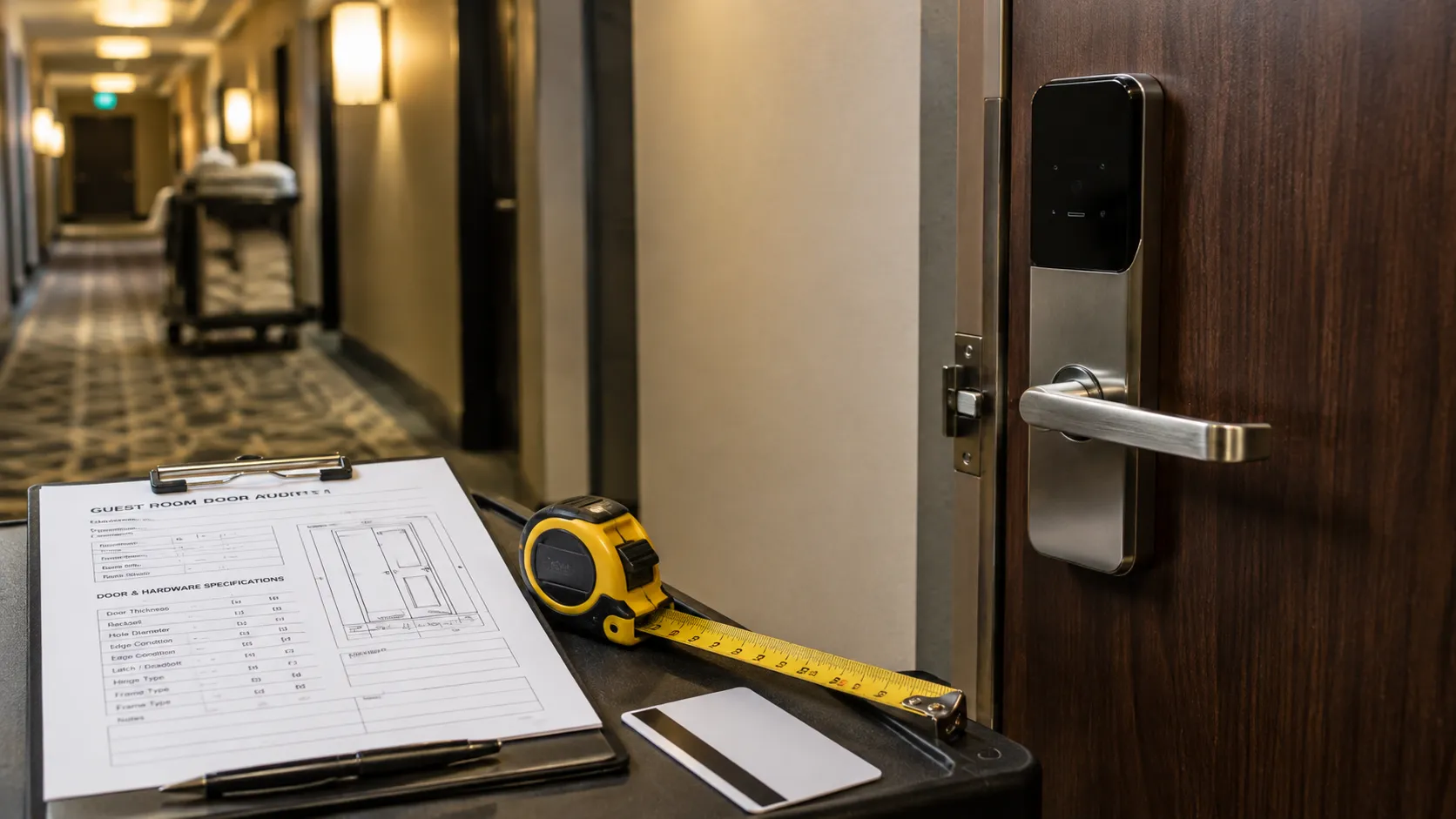
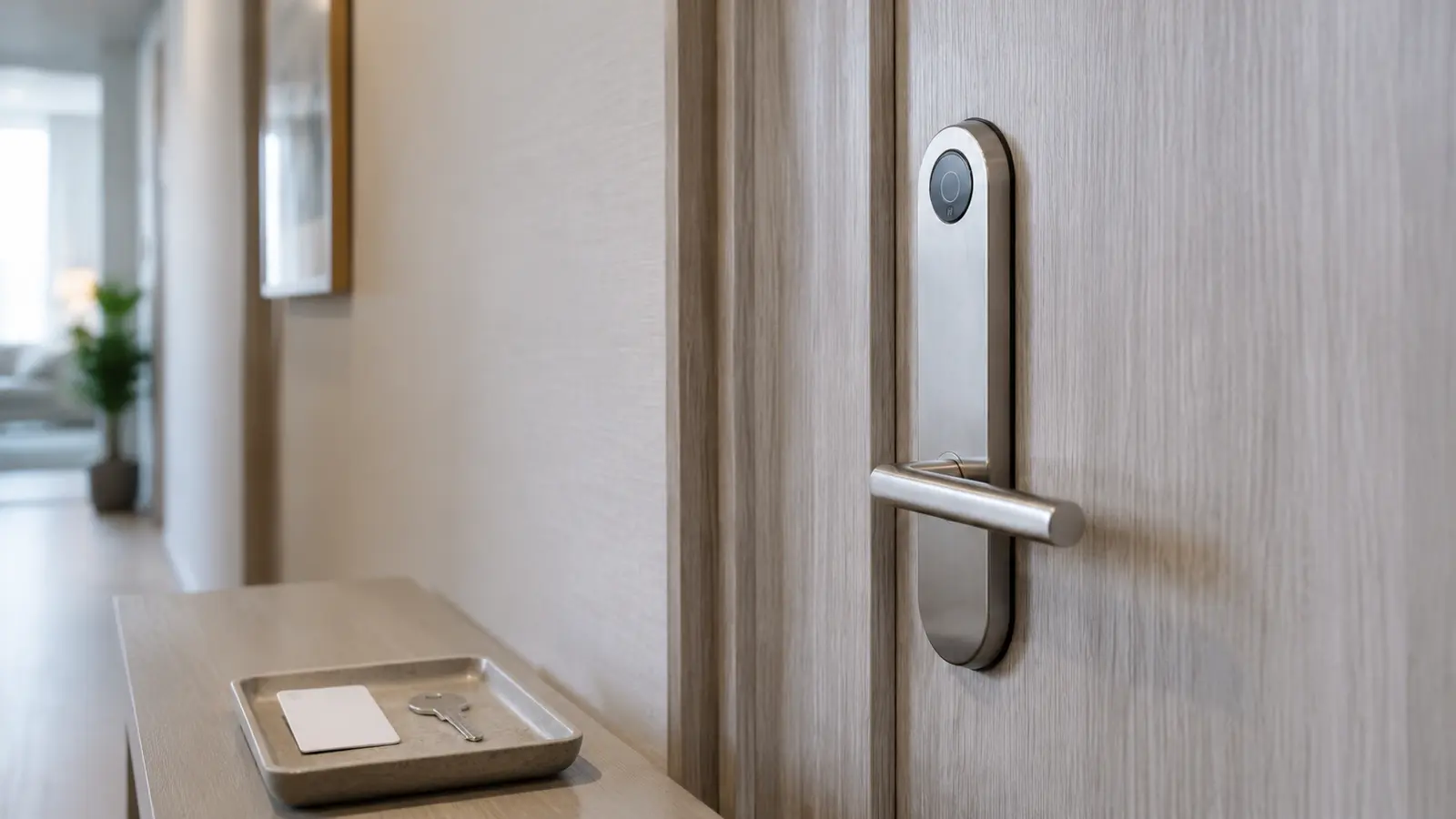
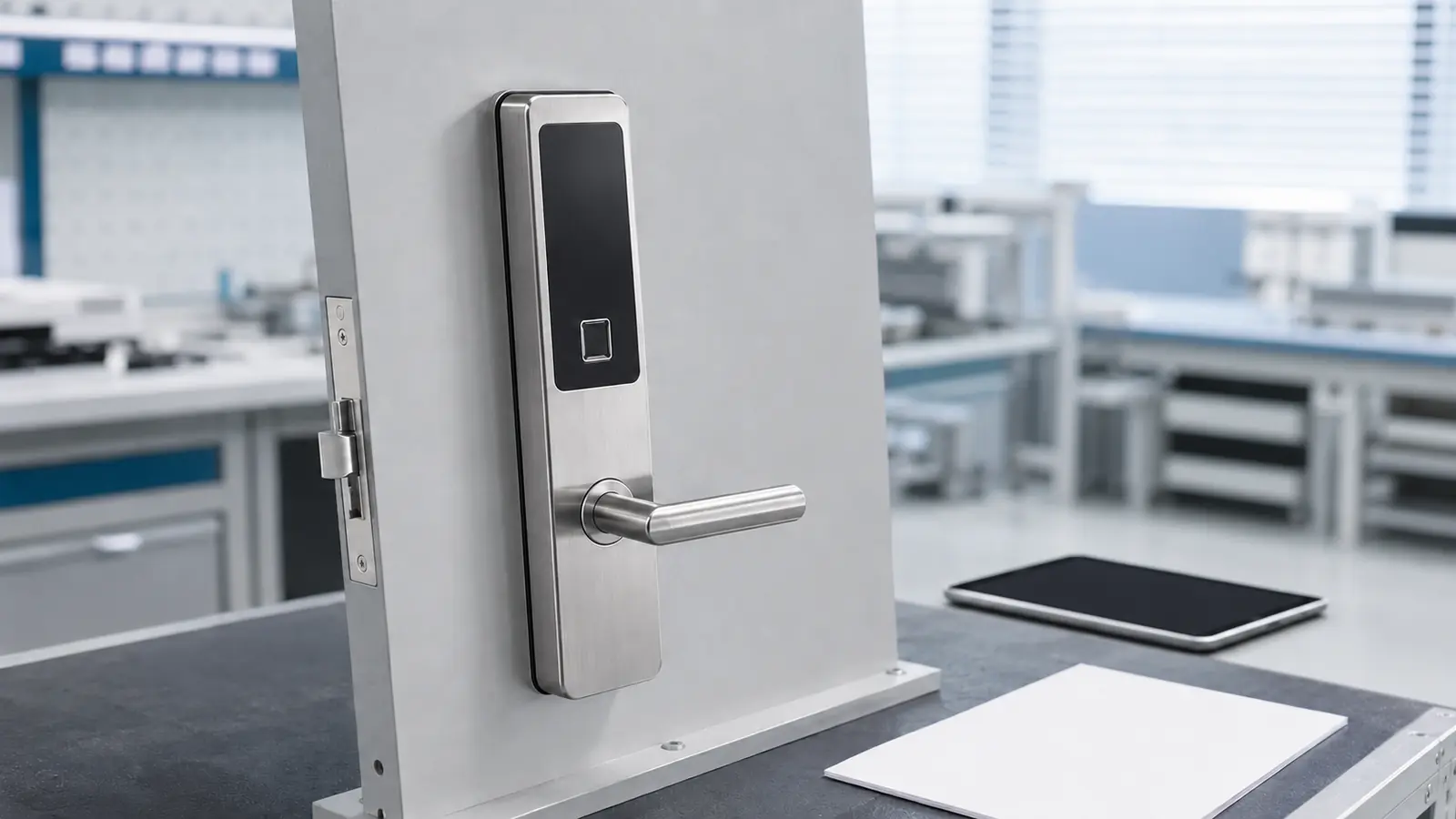
Direct Answer: Hotel buyers should specify smart hotel door locks for retrofit projects by auditing existing doors, confirming lock-body and drilling compatibility, defining the credential and front-desk workflow, testing representative rooms, and separating hardware from site work. A reliable RFQ should include door data, room count, access requirements, pilot scope, packaging, rollout sequence, and acceptance responsibilities before a batch quotation is compared.
Replacing hotel locks is not the same as selecting hardware for a new building. In a retrofit, every purchasing decision must work with doors, cut-outs, lock bodies, guest-room operations, and installation conditions that already exist. Haolock supplies smart locks, swipe-card smart locks, hotel lock system products, and related access-control products for overseas B2B projects. Its product range can include card, password, fingerprint, mechanical-key, temporary-password, Bluetooth, App, and computer-management options depending on the specific model. Buyers should therefore start with the existing hotel condition rather than assuming that one lock format or management method fits every property.
Why Does a Hotel Retrofit Need a Door Audit Before Product Selection?
A retrofit fails commercially when the project team selects a lock first and studies the doors later. The lock may appear suitable in a catalogue, but the installation can still require additional cutting, filler plates, strike adjustment, door repair, or different lock bodies across room types.
A door audit should identify whether the hotel has one repeatable door condition or several groups. Older properties often contain rooms renovated at different times, replacement doors from different suppliers, or mixed left/right handing. Buyers do not need to measure every detail before the first inquiry, but they should collect enough representative data to stop suppliers from quoting on unsupported assumptions.
| Retrofit Variable |
What the Buyer Should Record |
Why It Affects the Project |
| Door material |
Wood, metal, composite, or other construction |
Installation method and fastening conditions can differ. |
| Door thickness |
Measured thickness at the lock position |
Handles, spindle, screws, and lock-body fit depend on the actual door. |
| Existing mortise / lock body |
Faceplate, backset, spindle position, lock-body dimensions, and photos |
A new lock may not fit the old pocket without modification. |
| Existing hole pattern |
Front/back photos and measurements of current drilling |
Old holes may remain visible or conflict with the new mounting pattern. |
| Door handing |
Left/right and opening direction for each representative room type |
Incorrect handing creates installation delays and rework. |
| Frame and strike |
Strike position, latch alignment, closing condition, and visible wear |
A new lock cannot solve an existing door-alignment problem by itself. |
How Should Buyers Check Lock-Body and Drilling Compatibility?
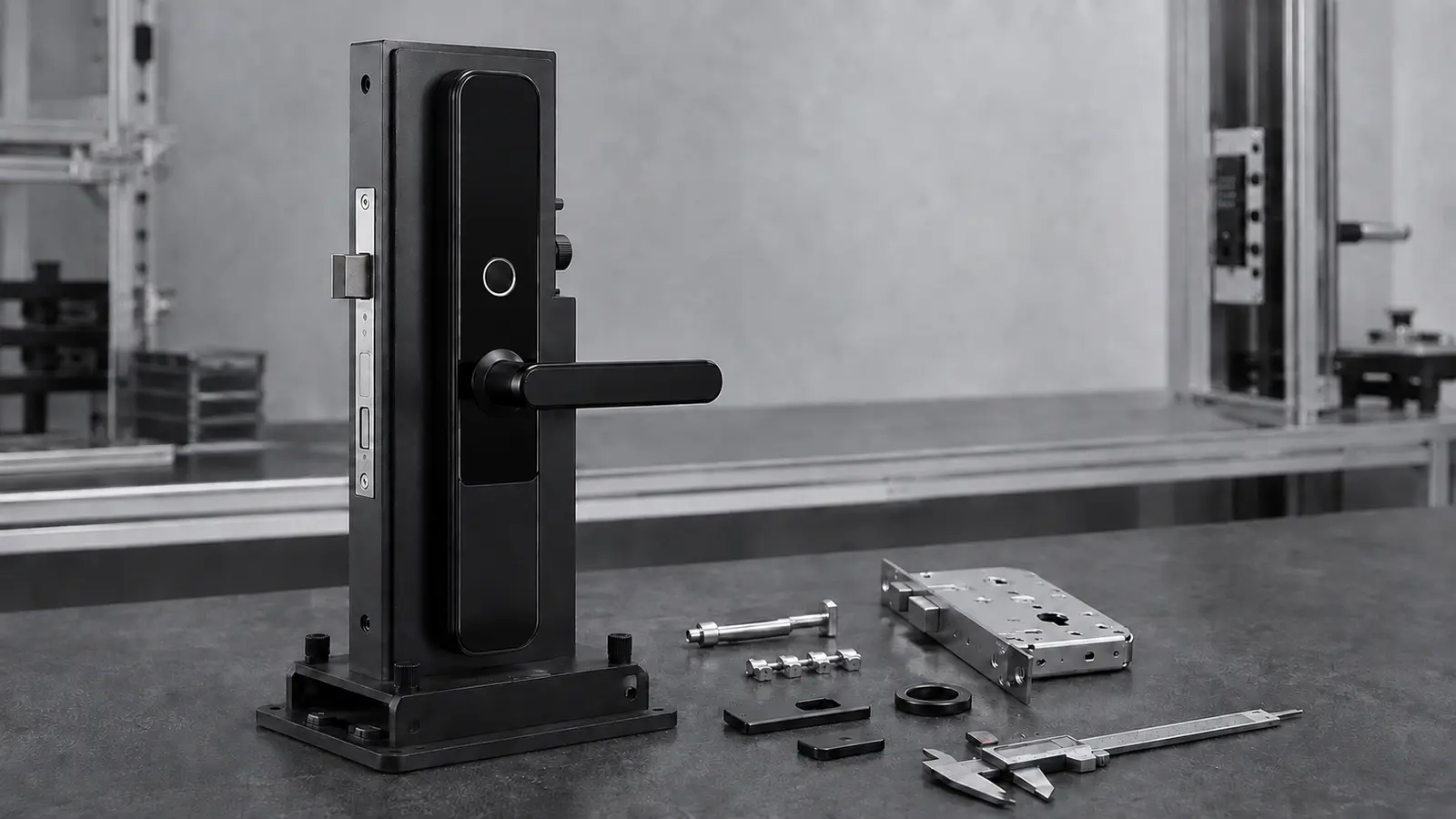
The most important mechanical comparison is between the existing door preparation and the proposed lock configuration. Buyers should request a model-specific installation or lock-body drawing and compare it with the representative doors. The goal is not simply to ask whether the lock “fits a hotel door,” but to determine whether it fits the hotel’s current mortise, backset, spindle location, handle position, and visible cut-outs.
Three retrofit conditions should be separated before commercial comparison:
- Near-direct replacement: the proposed lock and existing door preparation are sufficiently compatible for limited adjustment.
- Replacement with modification: drilling, cutting, strike work, cover plates, or other local door work is required.
- Different door group: the property contains another door type that may require a different lock body, installation method, or separate pilot.
This distinction matters because hardware price and installed project cost are not the same thing. A supplier can quote an attractive lock price while the local contractor later discovers substantial door work. The RFQ should therefore state whether door modification is included, local-installer scope, buyer scope, or still to be confirmed.
What Front-Desk and Credential Workflow Must Be Defined?
Hotel buyers should map the access workflow before choosing the final product configuration. Haolock’s wider product range includes multiple unlocking and management options, but exact functions vary by model. The buyer should describe what the hotel needs staff and guests to do, then ask which product and supporting equipment match that workflow.
For a typical hotel project, useful questions include:
- Will guests use swipe cards, passwords, another credential method, or a combination?
- Who issues, replaces, and cancels guest credentials?
- Do housekeeping and maintenance teams require separate staff access?
- How are room numbers and access permissions assigned?
- Is a card issuer, encoder, management computer, or other supporting device required?
- Does the hotel require a particular software workflow?
- If PMS-related integration is required, what exact interface, software, hardware, or test evidence must be confirmed?
- What backup or emergency-access method must the selected model provide?
PMS compatibility should never be inferred from the words “hotel lock system.” If the project requires PMS integration, the requirement should be written into the RFQ and confirmed for the exact proposed configuration before mass ordering.
Why Should Buyers Separate Hotel Lock Hardware From System Scope?
A retrofit quotation can become difficult to compare when one supplier prices only the locks, while another includes additional cards, encoders, software-related items, commissioning, training, or project support. Buyers should normalize each quotation into the same scope.
| Scope Item |
Buyer Question |
Why It Matters |
| Lock hardware |
What exact model, lock body, finish, handles, keys, and included accessories are quoted? |
Prevents comparison between different hardware packages. |
| Credential items |
Are cards or other credentials included, optional, or buyer-supplied? |
Affects room-by-room deployment and operating stock. |
| Encoder / issuer |
Is supporting hardware required and included? |
Front-desk operation may depend on it. |
| Management software |
What is included, what is optional, and what must be verified for the selected model? |
Avoids assuming management functions from the hardware description. |
| Door preparation |
Who performs cutting, drilling, repair, strike adjustment, or reinforcement? |
Often becomes a hidden retrofit cost. |
| Installation labor |
Supplier, local contractor, buyer team, or split responsibility? |
Prevents labor gaps between quotations. |
| Commissioning and training |
What testing, handover, and staff instruction are included? |
Clarifies when the project is considered operational. |
Why Is a Sample-Room Test More Important Than a Catalogue Comparison?
A sample-room test converts assumptions into project evidence. Instead of approving a batch from product photos and written specifications, the hotel tests the proposed lock on a representative guest-room door and runs the actual staff workflow before mass release.
The sample should verify both mechanical and operational conditions:
| Sample-Room Check |
What to Verify |
Buyer Decision |
| Mechanical fit |
Lock body, drilling, handle position, spindle, screws, strike, and door closing |
Is the selected configuration practical for this door group? |
| Visible finish |
Coverage of previous holes, finish consistency, and appearance on the actual door |
Will the retrofit look acceptable after replacement? |
| Guest credential |
Issue, use, replace, and cancel the selected credential |
Does the proposed workflow match front-desk operations? |
| Staff access |
Housekeeping, maintenance, and administrator access where required |
Can the hotel operate the access hierarchy it needs? |
| Emergency access |
Model-specific backup or override method |
Is the fallback procedure acceptable to the operations team? |
| Installation process |
Time, tools, modifications, installer skill, and room access conditions |
Can the hotel estimate rollout disruption more accurately? |
If the property contains several door types, one sample room is not enough. The buyer should test at least one representative door from each materially different group before treating a single lock configuration as hotel-wide.
How Should Hotels Plan the Retrofit Rollout Without Disrupting Operations?
Even when the hardware is correct, deployment can fail if the installation sequence conflicts with occupancy and hotel operations. The RFQ should explain when rooms can be accessed, whether the property remains open during replacement, and how the installer will handle rooms that cannot be taken out of service at the planned time.
Important rollout variables include:
- Number of rooms by floor and door type
- Expected rooms available for work each day
- Whether occupied-room access is restricted
- Permitted work hours and noise restrictions
- Storage space for locks, cards, tools, and removed hardware
- Room-by-room labeling and packaging requirements
- Sequence for lock installation, credential setup, testing, and handover
- Procedure for doors that fail the standard retrofit condition
Packaging becomes more important at this stage. Project labeling by floor, room group, model, or installation batch can reduce sorting mistakes when hundreds of locks arrive at the property.
What Acceptance Criteria Should Be Agreed Before Mass Installation?
A retrofit should have a simple acceptance checklist agreed before the main rollout. Otherwise, the installer may consider a lock “installed” while the hotel considers the room incomplete because the door does not close correctly, staff credentials have not been tested, or front-desk setup is unfinished.
Typical buyer-side acceptance points include:
- Lock is securely fitted to the approved door condition.
- Door closes and latches without abnormal force.
- Guest access method works as specified.
- Required staff and administrator access works as specified.
- Backup or emergency access is verified for the selected model.
- Room number or credential assignment is correct.
- Visible finish and old-hole coverage meet the approved sample expectation.
- Required accessories and documentation are present.
- Room is recorded as tested and handed over.
Scenario: How Can a Low Hardware Price Create a Higher Retrofit Cost?
Representative scenario — not a claimed Haolock customer case.
Business Background: A hotel plans to replace older card locks across 180 guest rooms while continuing normal operations. The purchasing team requests quotations using only room quantity, lock appearance, and a requirement for card access.
Problem: The lowest quotation is selected for sample testing. During installation, the contractor discovers that one floor has a different mortise and another room group has old drilling that remains visible after the new lock is fitted. Additional door work is required, and the sample also reveals that the front-desk credential workflow needs supporting equipment that was not included in the first quotation.
Cause: The buyer compared unit hardware prices before defining door groups, lock-body compatibility, credential scope, and site-work responsibility.
Solution: The hotel groups doors by existing condition, measures representative mortises and drilling, confirms the credential workflow, runs a sample-room test for each door group, and asks every supplier to complete the same quotation-scope matrix.
Buyer Decision Value: The revised process separates lock price from retrofit work and system scope, allowing the buyer to compare equivalent offers and plan the rollout with fewer site surprises.
How Should Buyers Normalize Smart Hotel Door Lock Quotations?
| Quotation Line |
Supplier A |
Supplier B |
Buyer Check |
| Lock model and finish |
Included / model stated |
Included / model stated |
Are both offers based on equivalent hardware? |
| Lock body / mortise |
Included / optional / TBD |
Included / optional / TBD |
Does it match each representative door group? |
| Credentials |
Included / optional |
Included / optional |
Quantity and credential type should be stated. |
| Encoder / supporting equipment |
Included / optional / not applicable |
Included / optional / not applicable |
Confirm what the selected workflow requires. |
| Software / management scope |
Defined / not defined |
Defined / not defined |
Do not assume functions not stated in the quote. |
| Door modification |
Included / local scope |
Included / local scope |
Separate standard installation from extra door work. |
| Sample-room support |
Included / optional |
Included / optional |
Confirm what evidence and support are provided. |
| Commissioning / training |
Included / optional / excluded |
Included / optional / excluded |
Define handover responsibilities. |
| Packaging and labeling |
Standard / project-specific |
Standard / project-specific |
Check floor, room, or batch labeling needs. |
| Spare units |
Defined / optional |
Defined / optional |
Separate operating spares from installed quantity. |
What Should a Retrofit RFQ for Smart Hotel Door Locks Include?
A strong first RFQ does not need to contain every engineering answer. It does need to remove the assumptions that most often distort a retrofit quotation.
| RFQ Input |
What to Provide |
| Hotel profile |
Room count, building status, renovation schedule, and whether the hotel remains operational |
| Door groups |
Door material, thickness, handing, photos, existing mortise, backset, drilling, and representative quantities |
| Access workflow |
Guest, housekeeping, maintenance, administrator, and emergency-access requirements |
| Credential method |
Card, password, key, or other required method; exact model capability to be confirmed |
| Management requirements |
Encoder, software, computer management, or PMS-related requirements that must be verified |
| Pilot |
Representative room types, sample quantity, and acceptance checks |
| Installation scope |
Supplier, local contractor, buyer responsibility, door modification, commissioning, and training |
| Delivery |
Destination, rollout batches, labeling, packaging, spare quantity, and target schedule |
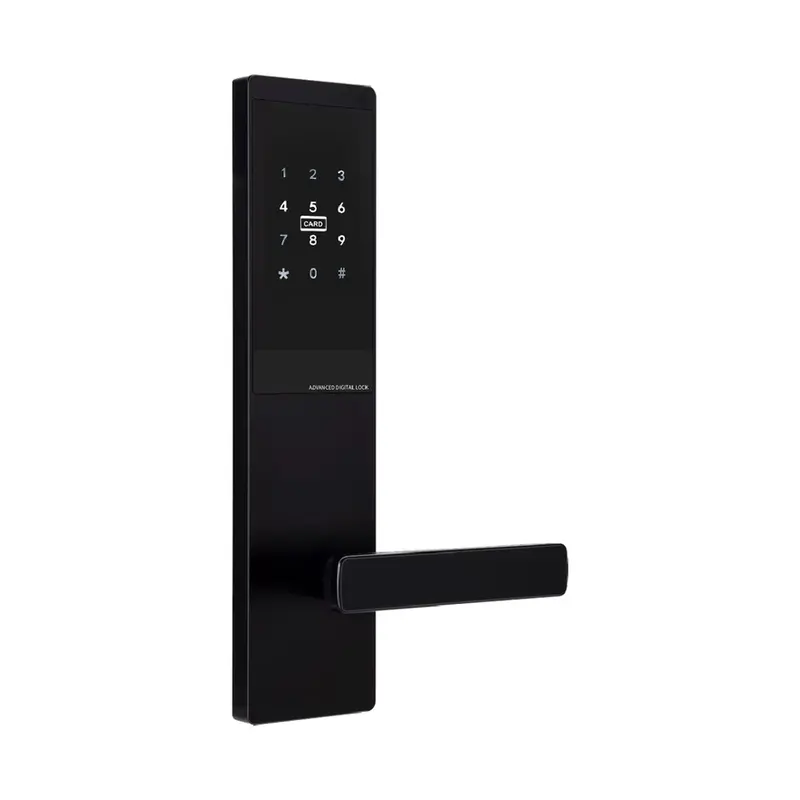
Buyers researching suitable product families can compare Haolock’s Swipe Card Smart Lock and Smart Lock categories. For a specific product reference, the 2115 Black Password Lock is one of the available product pages, but its suitability for a hotel retrofit should still be confirmed against the actual door and required workflow rather than assumed from the page title alone.
Frequently Asked Questions
Can hotel buyers select a retrofit lock only by unlocking method?
No. Card, password, fingerprint, or other access methods are only part of the decision. Retrofit buyers must also verify the existing mortise, backset, drilling, door thickness, handing, frame condition, staff workflow, and installation scope.
Should PMS integration be assumed for a hotel lock system?
No. If PMS-related integration is required, the buyer should define the exact requirement and ask the supplier to confirm the applicable model, supporting hardware, software, interface, and verification process for that project.
Why is a sample-room test important?
It verifies physical fit, door modification needs, credential operation, staff workflow, emergency access, visible finish, and installation effort before the buyer commits to a larger batch.
What if the hotel has several different door types?
Group the doors by material, thickness, mortise, drilling pattern, handing, and other meaningful differences. Test representative doors from each group instead of assuming one successful sample covers the entire hotel.
Who should perform door modifications during a retrofit?
That is a project-scope decision. The RFQ should state whether modification is handled by the supplier, local installer, hotel contractor, or another party. It should not be assumed to be included in the lock price.
What should buyers ask about emergency access?
Describe the hotel’s required fallback procedure and ask the supplier to confirm the exact model-level emergency or backup access method. Do not assume every lock uses the same mechanism.
What information should be sent with the first quotation request?
Send room count, representative door photos and measurements, existing lock-body information, required credential workflow, management requirements, pilot plan, installation responsibility, destination, packaging needs, and rollout schedule.
Prepare the Retrofit Package Before Requesting a Batch Quote
The strongest hotel-lock inquiry is not simply “send price for 200 rooms.” Start with a representative door audit, define guest and staff access, separate lock hardware from supporting system and site-work scope, and approve sample rooms before mass release. Haolock can review product and configuration requirements based on the door type, application, unlocking method, and management method provided by the buyer. Send the retrofit data and RFQ requirements through Contact Us so the proposed smart hotel door lock configuration can be discussed against the actual project conditions.