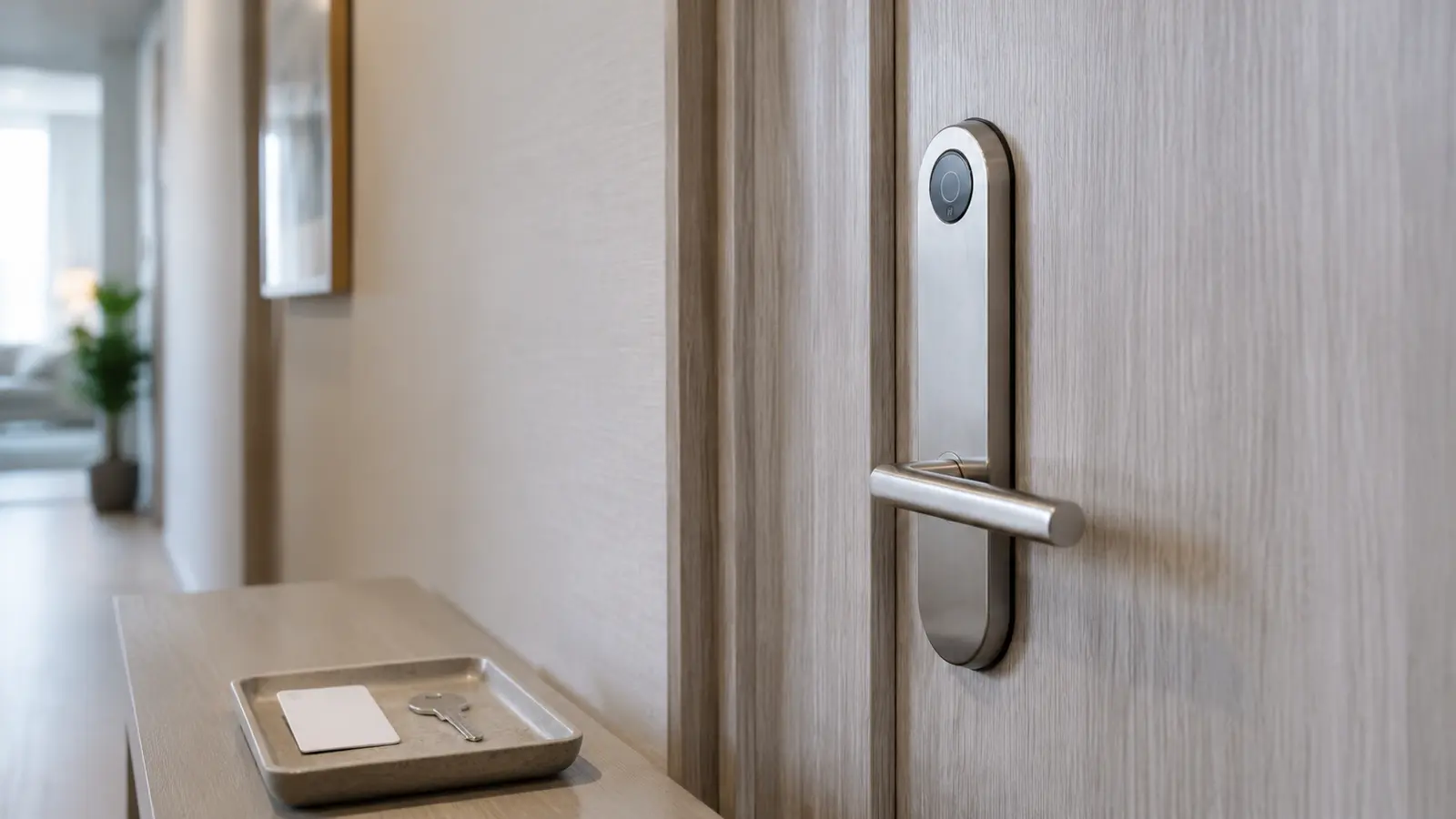
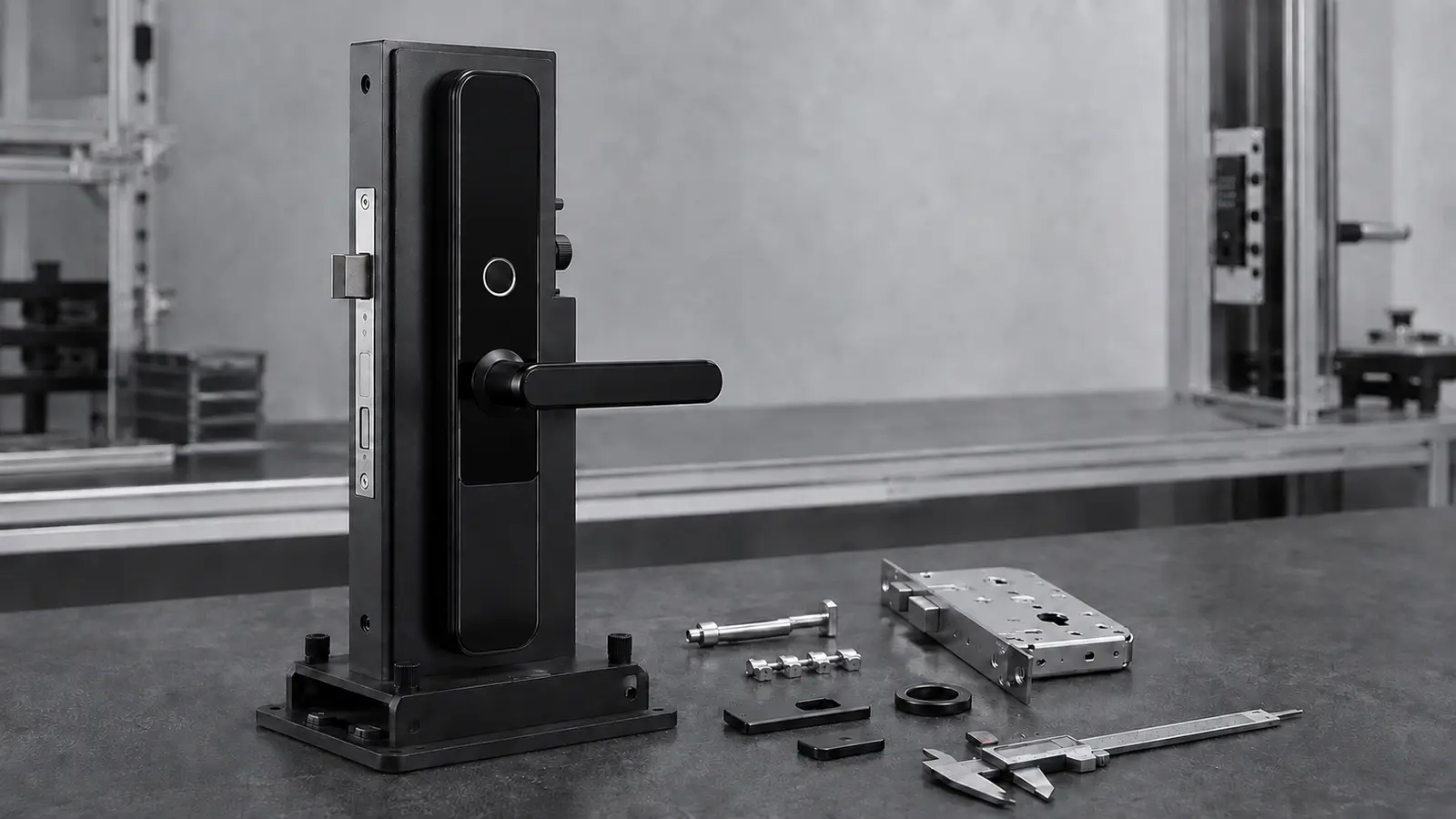
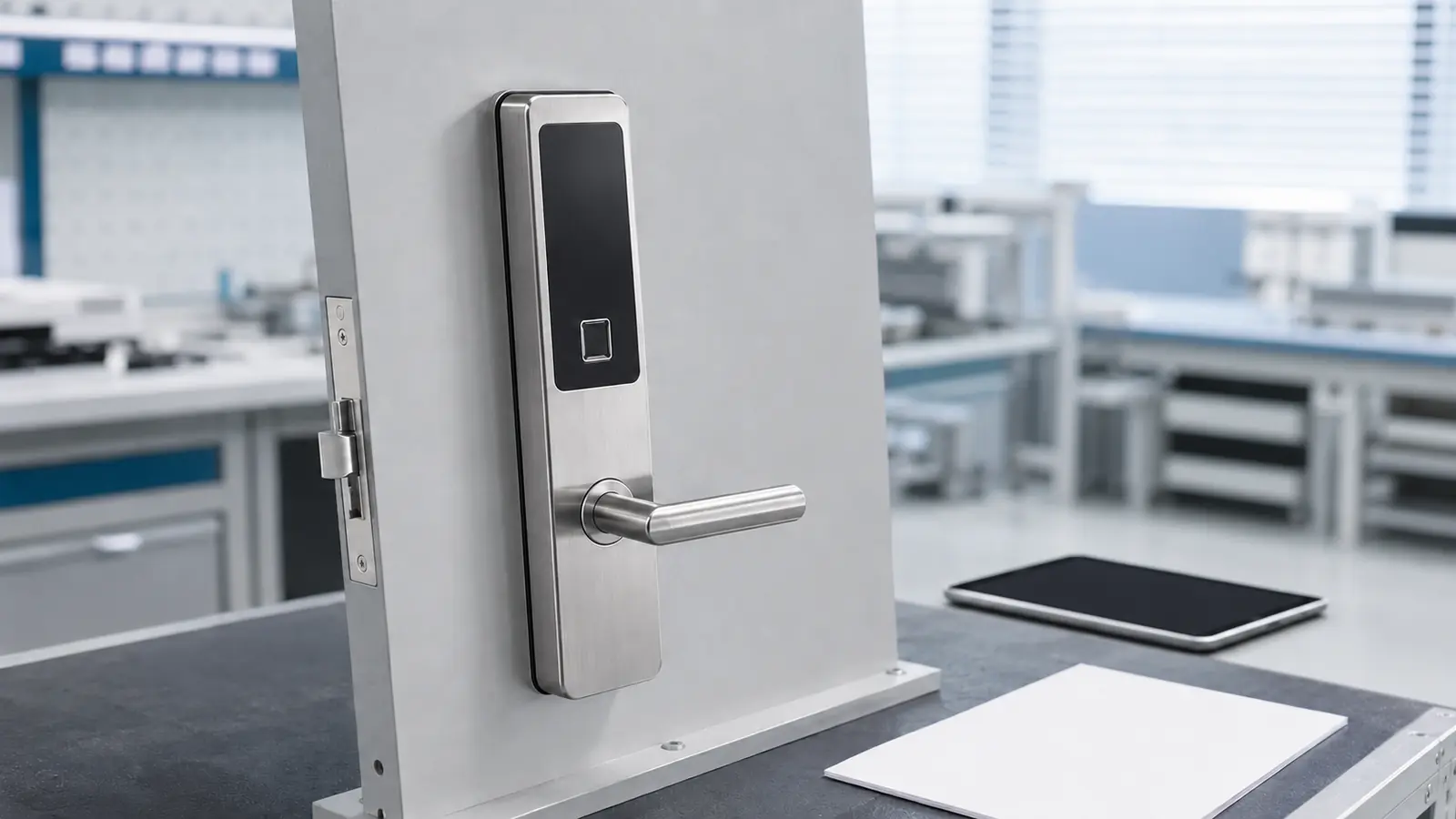
Buyers should plan fingerprint enrollment as an operating lifecycle, not as a single setup step. Before selecting a smart lock with fingerprint access, define who may enroll a user, how identity is checked, which doors that user may open, how failed enrollment is handled, when access is deleted and what non-biometric backup remains available. The project must then verify those actions on the exact lock and management configuration proposed. This is especially important in apartments and managed rooms, where occupants, employees and contractors change over time and where unclear administrator ownership can leave old access active after handover.
Why fingerprint enrollment belongs in the procurement specification
A fingerprint reader may be visible on the lock, but the reader alone does not define how a property will control access. Enrollment authority, user capacity, deletion method, local or centralized management, fallback credentials and administrator transfer all affect daily operation. If these points are left until installation, the property may discover that its intended workflow is not supported or that staff do not have a controlled way to remove former users.
Buyers comparing fingerprint smart lock options should first write an operating policy that is independent of any model. That policy becomes the basis for product evaluation. The supplier can then explain which requirements are supported, which depend on a particular configuration and which require a different approach.
The policy should also account for the sensitivity of biometric information. Legal obligations differ by country and use case, so the buyer should identify the project’s applicable privacy requirements and obtain appropriate legal or compliance advice. Procurement should not assume that every lock stores or processes fingerprint information in the same way. Ask the supplier to explain the proposed architecture and documentation without guessing whether raw images, templates or other records are retained.
Map every user group before choosing the enrollment method
Apartment projects rarely have only one user type. Long-term residents, short-stay occupants, property employees, cleaning teams, maintenance contractors and emergency managers have different access durations and accountability needs. A useful enrollment plan identifies each group before assigning a credential.
| User group |
Decision to make |
Acceptance evidence |
| Resident |
Who verifies identity, enrolls the user and removes access at move-out? |
Observed enrollment and deletion test on the proposed model |
| Property staff |
Should access be individual, shared, permanent or limited by role? |
Role list and test showing permitted and rejected entry |
| Contractor |
Is fingerprint enrollment justified for temporary work, or is another credential more appropriate? |
Temporary-access procedure and confirmed deletion |
| Administrator |
Who can add or remove users, reset the lock and transfer control? |
Administrator handover and recovery test |
| User unable to enroll |
Which alternative access method is available without creating unequal or unsafe access? |
Successful backup-access test under normal and exception conditions |
Not every person who needs door access needs fingerprint enrollment. A contractor visiting once may be better served by a controlled temporary credential if the proposed system supports it. A resident whose fingerprint cannot be enrolled reliably needs a practical alternative. Selecting the least complex credential that satisfies the real access need can reduce unnecessary enrollment and simplify removal at the end of access.
Define the enrollment ceremony step by step
An enrollment ceremony is the repeatable procedure staff follow when adding an authorized person. It should be short enough to use consistently but detailed enough to prevent an administrator from enrolling the wrong person or assigning the wrong door.
- Authorize the request. Confirm who requested access, who approved it and which property rule applies.
- Verify the person. Use the identity-checking process chosen by the property; do not leave this to an installer’s informal judgment.
- Confirm scope. Record the door, room or access group, the start date and the expected end or review date.
- Explain data handling. Provide the notices and choices required by the project’s applicable policy and law before collection.
- Enroll on the approved configuration. Follow the model-specific instructions and record the administrator responsible.
- Test entry and rejection. Confirm that the new user can open authorized doors and cannot open an unauthorized test door where the system supports that distinction.
- Verify the backup method. Test the approved password, card, key or other alternative on the exact supplied version.
- Close the record. Link the user, lock or room, credential status, enrollment date and planned deletion action.
The buyer should ask how the proposed lock distinguishes users and whether individual deletion is possible. Capacity, number of fingers per user, retry behavior, local records and remote-management functions must be confirmed for the quoted model. These values should never be inferred from a generic fingerprint-lock description.
Evaluate the exact product without assuming apartment fit
Haolock identifies the 2625 Silver Password & Fingerprint Lock as a 265 × 63 × 22 mm silver model made from SUS 304 with a stainless-steel brushed finish. The product name establishes a password-and-fingerprint candidate, while the listed physical facts help the buyer identify the model. They do not by themselves confirm door compatibility, fingerprint capacity, administrator workflow, privacy controls or suitability for a particular apartment project.
Before shortlisting the model, request a dimensioned drawing and confirm the lock body, door thickness, opening direction, handle orientation, spindle, existing cutout and required preparation. Then ask for model-specific operating instructions covering fingerprint enrollment, deletion, administrator transfer, reset and backup entry. If a management component or phone connection is required for any requested action, the quotation should identify it clearly.
A sample should be installed on a representative door, not only tested loose on a desk. Physical alignment can affect user behavior and recognition attempts. The trial should include different authorized users, repeat presentations, a deliberately unauthorized finger, deletion, re-enrollment, backup entry and administrator handover. The buyer should record expected and actual results without publishing a universal performance claim from a small project test.
Plan deletion before the first fingerprint is enrolled
Move-out, staff departure, contractor completion, room reassignment and administrator replacement are predictable events. Each event needs a named owner and a deletion deadline. A project that can add users but cannot prove timely removal has an incomplete access-control process.
The deletion test should show whether one user can be removed without affecting others, how the administrator confirms removal and what happens if the device is offline or unavailable. If the system uses several locks, determine whether deletion is performed separately at each door or through a management method. The supplier should explain the exact behavior of the quoted configuration.
Retention and disposal rules for biometric-related data should be agreed with the project’s privacy and legal stakeholders. Buyers should request documentation describing what data the product creates, where it is processed, how long it remains, how it is deleted and what records are exported or retained during handover. Where the architecture cannot provide a required control, the buyer may need a different credential method or product configuration.
Build acceptance tests around real exceptions
A demonstration that opens one door once is not a project acceptance test. The test plan should include normal use and predictable exceptions:
- a resident enrolls successfully and uses the approved finger;
- a second authorized user is enrolled without overwriting the first;
- an unauthorized finger is rejected;
- a user with a difficult or unavailable fingerprint follows the backup process;
- a former user is deleted and can no longer enter;
- an administrator is replaced without leaving uncontrolled authority;
- the property performs the documented reset and recovery procedure;
- the lock is checked after the power-related condition described by the manufacturer;
- room, lock and user records remain aligned after a turnover event.
Record the model, configuration, software or management component where relevant, door type, test date, expected result and actual result. If the result differs, decide whether the cause is product configuration, installation, operating procedure or an unsupported requirement. Correct the specification before bulk approval rather than training staff to work around an unresolved exception.
Use an operating handover sheet instead of a generic RFQ list
For this topic, the most useful inquiry format is a one-page operating handover sheet. It should accompany the commercial RFQ and show how the property expects the fingerprint lifecycle to work.
- Property and doors
- Project type, number of doors, door schedule, new or retrofit status and representative drawings.
- User population
- Residents, staff, contractors and administrators; expected turnover; users requiring alternatives.
- Enrollment ownership
- Approver, identity-verification owner, enrolling administrator and required records.
- Credential lifecycle
- Creation, change, review, deletion, re-enrollment, administrator transfer and exception handling.
- Backup access
- Required password, card, key or other method and who controls it.
- Product evidence
- Exact model, configuration, drawings, instructions, data-handling description and required management components.
- Acceptance
- Sample door, test users, exception cases, deletion proof, handover record and bulk consistency checks.
This format encourages the supplier to respond to the operating model rather than simply repeat a list of features. It also exposes missing decisions early, when the buyer can still adjust the credential policy or shortlist.
Frequently asked questions
Should every apartment resident use a fingerprint?
No. The property should decide whether biometric access is necessary for each user group and provide an appropriate alternative where required. The available methods and their behavior must be verified on the proposed lock configuration.
Can a fingerprint be transferred when a resident moves to another room?
Do not assume it can. The answer depends on how the exact model and management method associate users with locks or rooms. Test removal from the old door and authorization at the new door as a complete workflow.
What if a resident cannot enroll reliably?
The project needs a documented backup method and support procedure. Finger condition, presentation and device setup can affect recognition, but the buyer should not diagnose individual users through procurement content. Test the alternative access path before occupancy.
What should be deleted at move-out?
Remove the former user’s access from every applicable lock or management record, verify rejected entry, close outstanding exceptions and update the room-to-user register. Privacy-related deletion and retention should follow the project’s applicable policy and legal requirements.
Confirm the lifecycle before ordering the hardware
A smart lock with fingerprint access should be selected only after the property can explain enrollment, authorization, deletion, backup and handover. Those decisions protect operations from depending on one installer or administrator and give the supplier a testable basis for model selection.
To discuss a candidate model, submit the door schedule, user groups, enrollment process, backup-access needs, expected turnover and sample tests through the Haolock fingerprint lock inquiry form. Request written confirmation for every model-specific function. The resulting quotation should identify the exact supplied configuration and the evidence required before a fingerprint lock is approved for an apartment or managed-room project.