Direct Answer: Buyers should define who may create each code, when it becomes valid, when it expires, how staff access differs from guest access, how emergencies are handled, and what records transfer at project handover. These rules must then be tested against the exact keypad smart lock model, management method, and room-turnover workflow before bulk approval.
A keypad lock is not fully specified when an RFQ says only “password access required.” Hotels, guesthouses, apartments, homestays, and schools operate rooms differently. A code that works for a private residence may create avoidable control gaps when rooms change occupants, several staff teams need access, or a property manager must revoke credentials quickly. The buyer therefore needs a credential policy as well as a hardware specification.
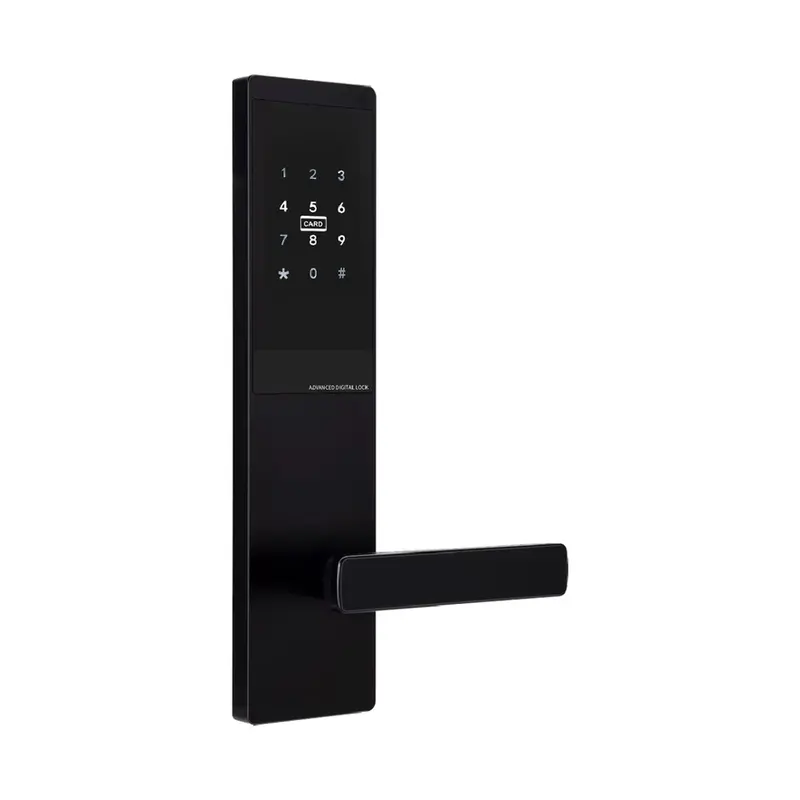
Why Is a Code Policy Part of the Keypad Smart Lock Specification?
The credential policy determines how the lock will be operated after installation. It affects guest turnover, staff accountability, emergency access, administrator handover, and the work required at every room change. Buyers reviewing password smart lock options should translate these operational needs into testable requirements before comparing quotations.
Industry experience point: A quotation can list “temporary password” without defining whether the code has a start time, an expiry time, a one-time-use condition, or only manual deletion. Those are different operating outcomes, so the RFQ should not treat the phrase as a complete specification.
The first decision is the room-management model. A hotel may create a credential for each stay, a long-term apartment may keep one resident code for months, and a school dormitory may need resident, supervisor, and maintenance access at the same door. The keypad smart lock must support the intended workflow on the exact model supplied; a function available somewhere in a supplier’s range should not be assumed to exist on every lock.
Which User Roles and Code Types Should Buyers Define?
Start with roles rather than features. Every role should have a clear owner, validity rule, revocation process, and acceptance test.
| User role |
Code rule to define |
Main risk if undefined |
Evidence to request |
| Guest or short-stay occupant |
Start time, expiry time, reuse policy, and room assignment |
A previous occupant may retain access or a new guest may receive a code too early |
Operating instructions and a timed-code demonstration on the proposed model |
| Long-term resident |
Who creates, changes, and revokes the resident code |
Ownership becomes unclear when the tenant or property manager changes |
Administrator procedure and reset process |
| Housekeeping or routine service |
Allowed rooms, permitted hours, shared or individual code policy |
A shared permanent code weakens accountability |
Role test covering permitted and rejected access |
| Maintenance |
Approval, time window, scope, and post-work revocation |
A temporary repair credential remains active after the visit |
Issue-and-revoke test record |
| Emergency manager |
Override authority, storage, use record, and post-event review |
Emergency access is unavailable or too widely distributed |
Documented override and recovery procedure |
| System administrator |
Administrator count, transfer, reset authority, and backup responsibility |
The property depends on one person or the installer after handover |
Administrator handover checklist |
Industry experience point: Shared staff codes are easy to deploy but difficult to audit. When accountability matters, buyers should ask whether individual credentials are supported and how many can be managed on the proposed configuration.
How Should Guest and Temporary Code Rules Be Written?
A useful requirement describes the full credential lifecycle: creation, communication, activation, use, expiry, and deletion. For short stays, the buyer should decide whether access begins at the scheduled check-in time or when staff activate the room. The same decision is needed at checkout: automatic expiry and manual revocation create different workloads and different failure modes.
- Define who is authorized to create a guest or visitor code.
- Specify whether validity is scheduled, one-time, recurring, or manually controlled.
- State whether overlapping guest codes are allowed during cleaning or inspection.
- Define how a code is delivered and who verifies the room number and validity period.
- Set a rule for early checkout, stay extension, room transfer, and lost-phone situations.
- Require deletion or expiry verification as part of room turnover.
Industry experience point: Extending a stay is a common exception that is often missed in sample testing. The property should test whether an active credential can be extended cleanly or must be replaced, and whether the old validity period remains visible to staff.
How Should Staff, Administrator, and Emergency Access Differ?
Guest access should not automatically define staff access. Staff may need recurring time windows, access to several rooms, or access only when a work order is active. Administrator credentials require tighter ownership because they may create, delete, or reset other credentials. Emergency access should remain available when the routine workflow fails, but the buyer must decide who holds that authority and how use is reviewed.
Mechanical key access can provide an independent fallback on models configured for it, but the key itself becomes a controlled credential. Key numbering, storage, issue records, duplicates, and replacement after loss should be included in the operating plan. A keypad policy that ignores physical keys is incomplete where keys remain part of the supplied lock.
Industry experience point: Buyers sometimes test a guest code but never test administrator transfer. If the installer retains the only effective administrator authority, the property may be unable to manage rooms independently after commissioning.
What Must Buyers Verify on the Exact Lock Model?
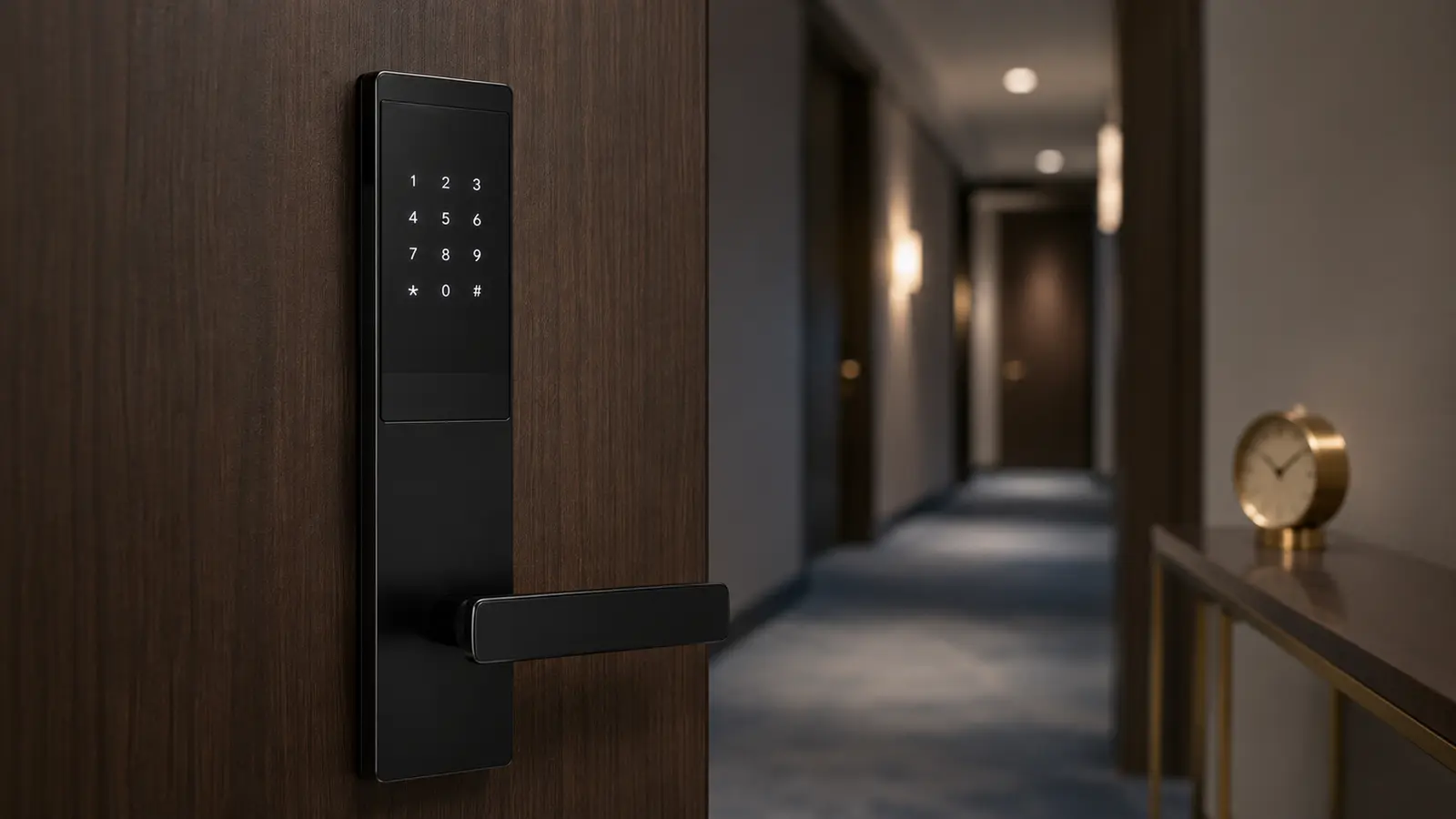
The procurement team should separate the required workflow from the supplier’s model evidence. For example, Haolock’s product database identifies the 2115 Black Password Lock as a 300 × 75 × 12 mm anodized model using an aluminum oxide profile and lists card, key, and temporary unlocking methods. The database wording alone does not define code length, validity logic, user capacity, event records, or management workflow. Those details should be confirmed for the offered version before the model is approved as a keypad smart lock for a managed-room project.
Buyers should request model-specific answers to the following questions:
- Which credential types are enabled on the quoted version?
- How are administrator, permanent, temporary, and one-time credentials distinguished?
- What limits apply to code length, code quantity, validity periods, and failed attempts?
- How are credentials created, modified, deleted, backed up, and transferred?
- What happens after battery loss, reset, emergency opening, or administrator replacement?
- Which functions work locally and which require a separate management component?
Industry experience point: A product family name is not configuration evidence. Sample labels, quotation descriptions, manuals, and delivered cartons should identify the same model and enabled functions so that a mixed or substituted batch can be detected before installation.
How Should Buyers Test Code Rules Before Bulk Approval?
A sample should be tested as an operating workflow, not only as a door-opening demonstration. The test should include valid entry, early entry, expired entry, repeated incorrect entry, staff access outside an allowed period, guest extension, room reassignment, credential deletion, emergency opening, reset, and administrator handover. Results should record the model, configuration, test date, expected result, actual result, and person responsible.
Door compatibility remains a separate approval item. Credential functions do not confirm that the lock body, spindle, handle direction, door thickness, opening direction, or existing cutout fits the project. Buyers can use the Haolock smart lock product range to identify candidate models, but physical fit and code governance must be approved as separate, model-specific requirements.
What Does a Complete Handover Record Include?
The handover should allow the property team to operate the locks without relying on informal installer knowledge. Record the approved credential roles, current administrators, room-to-lock mapping, code creation procedure, revocation procedure, emergency method, reset authority, key-control record, training completion, and acceptance-test results. Default or demonstration credentials should be removed or changed before occupancy.
Industry experience point: A successful sample does not guarantee a controlled bulk handover. Room numbers, lock identifiers, administrator ownership, and credential records can become misaligned during installation unless the project uses a consistent room-to-device register.
Representative Scenario: How Could a Guesthouse Define Its Code Workflow?
Representative scenario — not a claimed customer case.
Scenario: A guesthouse is replacing mechanical room locks with managed-room keypad locks.
Business Background: Guest stays range from one night to several weeks. Housekeeping needs scheduled access, while maintenance access should be issued only for approved work.
Problem: The initial RFQ requests “password and temporary access” but does not define expiry, extensions, staff access, emergency opening, or administrator transfer.
Cause: The buyer treats password access as a product feature instead of a property operating policy.
Solution: The buyer defines separate guest, housekeeping, maintenance, and administrator roles; tests check-in, extension, early checkout, revocation, and emergency procedures; and approves only a model whose documented workflow matches those rules.
Buyer Decision Value: The buyer can compare suppliers against the same credential lifecycle instead of comparing an undefined “temporary password” claim.
What Should the RFQ Include?
- Property type, room count, door details, and expected occupant turnover.
- Required guest, resident, staff, maintenance, administrator, and emergency roles.
- Required validity rules, including start, expiry, extension, recurrence, and one-time use.
- Whether individual staff identification or access records are required.
- Required local, card, key, or other fallback methods.
- Administrator transfer, reset, training, documentation, and room-register requirements.
- Sample test cases and bulk acceptance criteria.
The trade-off is not simply more features versus fewer features. More credential types may improve flexibility but also increase training, handover, and control requirements. A simpler keypad workflow may be more reliable for a small property, while a larger managed-room project may need clearer role separation and records. The correct specification is the least complex workflow that still controls the property’s real operating risks.
Frequently Asked Questions
What is the most important keypad smart lock code rule?
The most important rule is credential ownership: who may create, change, extend, revoke, and reset each code. Validity periods are difficult to control when ownership is unclear.
Should every guest receive a unique code?
Unique codes can improve turnover control, but the decision depends on the lock’s supported workflow and the property’s operating process. Buyers should test code creation, expiry, and room reassignment on the exact model.
Are temporary passwords the same on every smart keypad lock?
No. “Temporary” may refer to timed, one-time, recurring, or manually deleted access. The RFQ should define the required validity logic and request a model-specific demonstration.
Should housekeeping use one shared code?
A shared code is simpler, but it reduces individual accountability. Properties should decide whether separate staff credentials, limited schedules, or room restrictions are required.
What should happen to codes at room turnover?
Expired or revoked access should be verified, the new occupant’s validity period should be confirmed, exceptions should be closed, and the room-to-lock record should remain accurate.
Does a keypad replace the need for an emergency method?
Not necessarily. Buyers should confirm the exact model’s emergency and reset methods, define who controls them, and test the procedure before project acceptance.
What evidence should a supplier provide before bulk production?
Request the quoted model and configuration, operating instructions, credential-limit details, sample test results, reset and emergency procedures, and a clear plan for bulk identification and handover.
How Can Buyers Request a Code-Policy Review?
For an RFQ review, provide the property type, number of rooms, door details, user roles, turnover process, required code validity rules, fallback method, management preference, and sample acceptance tests. Haolock can use those inputs to discuss model selection and project configuration. Buyers can also review why password smart locks fit managed-room workflows before submitting the project details through the Haolock contact page.