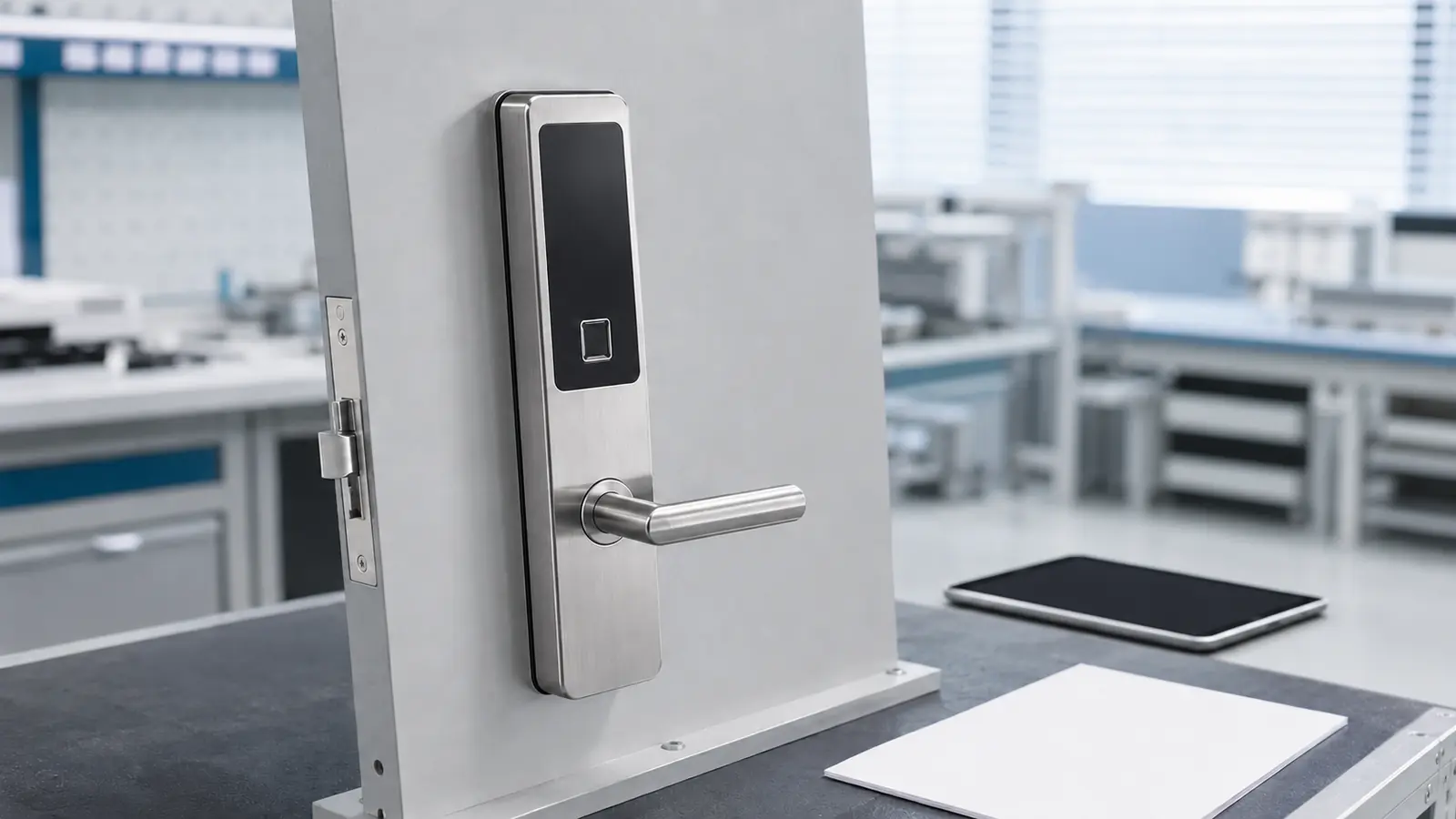
Direct Answer: Buyers should select keyless entry methods by matching each credential to the property’s users, turnover rate, management workflow, fallback needs, and handover capability. Passwords suit code-based access, cards support issued credentials, fingerprints suit enrolled users, and mechanical keys provide a separate fallback. Every method and combination must be verified on the exact quoted model.
“Keyless” does not describe one operating system. A hotel may prioritize fast guest credential issuance, an apartment operator may prioritize tenant turnover, and a private residence may prioritize convenient daily entry. A useful keyless entry smart lock specification therefore starts with people and operating events, then identifies the credential methods needed at each event.
Which Property Workflow Should Drive the Selection?
Define who enters, who authorizes access, how long access lasts, and what happens when a credential fails. Buyers reviewing smart lock product options should map at least four events: initial enrollment or issue, normal entry, turnover or revocation, and emergency recovery.
Industry experience point: Buyers often choose the most familiar entry method before mapping room operations. That can create unnecessary front-desk work, repeated resident enrollment, or a fallback process that nobody owns after installation.
The property should also distinguish room access from building access. A method that works well at a guest-room door may not match the lobby, staff area, elevator, or service entrance. This article addresses door-lock credential selection; wider access-control integration should be specified separately when required.
How Do the Main Entry Methods Compare?
| Entry method |
Typical operational fit |
Buyer must define |
Main trade-off |
| Password or keypad code |
Guesthouses, apartments, homestays, managed rooms, and resident access |
Code roles, validity, change, revocation, failed-attempt behavior, and administrator ownership |
No physical credential to issue, but code governance and privacy must be controlled |
| Card |
Hotels, schools, staff access, and properties with an issue-and-return workflow |
Card type, encoder or issuer, room assignment, loss handling, expiry, and replacement |
Fast physical issuance, but cards and issuing equipment must be managed |
| Fingerprint |
Enrolled residents, owners, or recurring staff when the model supports it |
User capacity, enrollment authority, deletion, failed-read response, and acceptance test |
No carried credential, but enrollment, user turnover, and recognition conditions require testing |
| Mechanical key |
Independent fallback, maintenance, or controlled emergency opening |
Key control, storage, duplicates, issue records, and lost-key response |
Works outside the electronic workflow, but physical-key risk remains |
| Temporary access |
Visitors, contractors, short stays, inspections, and time-bounded service |
Start, expiry, one-time or recurring logic, extension, and revocation |
Flexible limited access, but “temporary” must be defined for the exact model |
A buyer may select one primary method and one fallback, or a combination for different users. The correct combination is not the one with the longest feature list. It is the one the property can issue, revoke, document, train, and test consistently.
When Is Password Access the Better Primary Method?
Password access can fit properties that want to avoid issuing a physical credential for every occupant. It may be practical for apartments, homestays, guesthouses, schools, or managed rooms when code creation and turnover are controlled. Buyers should define whether passwords are permanent, timed, one-time, or manually removed and whether staff and guests use different credential roles.
The password decision should include privacy and communication. The property must decide who sends a code, how the recipient is verified, whether codes may be shared, and how access ends after checkout or tenancy. The detailed guide to password smart lock models can be used to identify candidate products, but every required code rule still needs model-level confirmation.
Industry experience point: A password method may remove card costs while adding staff work if codes cannot be scheduled, extended, or revoked in the way the property expects. Compare the full turnover workflow, not the credential alone.
When Does a Card Workflow Make More Sense?
Cards can suit hotels and other properties with a front desk or controlled credential-issuing point. Staff can issue a physical credential and the occupant does not need to remember a code. The RFQ should state the required card type, issuing equipment, room assignment process, expiry logic, lost-card handling, and whether master or staff cards are needed.
Card compatibility should never be inferred from the phrase “RFID lock.” The card, lock, issuing device, and management workflow must be tested together. Buyers can review Haolock’s swipe card smart lock range when a card-based workflow is preferred.
Industry experience point: A lock sample may accept the supplier’s demonstration card while failing with the buyer’s assumed card inventory or issuing process. Approval should cover the actual card and encoder combination intended for the project.
When Should Buyers Consider Fingerprint Entry?
Fingerprint entry can suit recurring users who can be enrolled, such as residents, owners, or authorized staff, when the proposed model supports fingerprint access. It is less naturally aligned with high-turnover guest access if enrollment and deletion create extra work. Buyers should define who may enroll or remove a fingerprint, how many users are needed, what happens after a failed read, and which fallback method remains available.
Recognition performance should be evaluated under representative use rather than assumed from a brochure. Test the sample with the expected user group and installation environment, record failed-read handling, and confirm how users are removed at turnover. Haolock lists a separate fingerprint smart lock category; availability and functionality should be confirmed by model.
Industry experience point: A fingerprint feature can be convenient in a demonstration but still be operationally unsuitable if the property has no controlled enrollment, deletion, and fallback process.
Why Should a Mechanical Key Still Be Specified?
A mechanical key is not keyless entry, but it may remain an important independent fallback on a keyless entry smart lock. Buyers should confirm whether the quoted model includes a key cylinder, how keys are numbered and supplied, who stores them, and what happens if a key is lost. A key should be treated as another credential rather than an unrecorded accessory.
Emergency power, reset, mechanical opening, and administrator recovery solve different failure conditions. The buyer should not assume that one method replaces all others. The acceptance plan should test loss of the primary credential, inability to enroll a new user, administrator change, and the lock’s stated emergency procedure.
Industry experience point: Emergency keys are sometimes sealed with accessories and become inaccessible when a door failure occurs. The property should approve secure storage and controlled availability before occupancy.
How Should Buyers Combine Entry Methods Without Adding Unnecessary Complexity?
Assign each method to a clear role. A hotel could use cards for guests, separate staff credentials for service teams, and a controlled key for emergency access. An apartment could use passwords for residents, temporary access for contractors, and a key for authorized fallback. Fingerprints may be added for recurring users only when enrollment and deletion are manageable.
More methods create more combinations to test. The buyer must know whether the quoted lock accepts each method independently, whether roles can be separated, how credentials are revoked, and what remains active after a reset. Documentation and training must cover the actual enabled configuration, not a broad product-family manual.
Industry experience point: Mixed-method projects fail at handover when the hardware list is accurate but the property lacks a credential register. Room number, lock identity, enabled methods, administrator owner, issued keys or cards, and acceptance status should be recorded together.
What Model-Level Evidence Is Needed Before Approval?
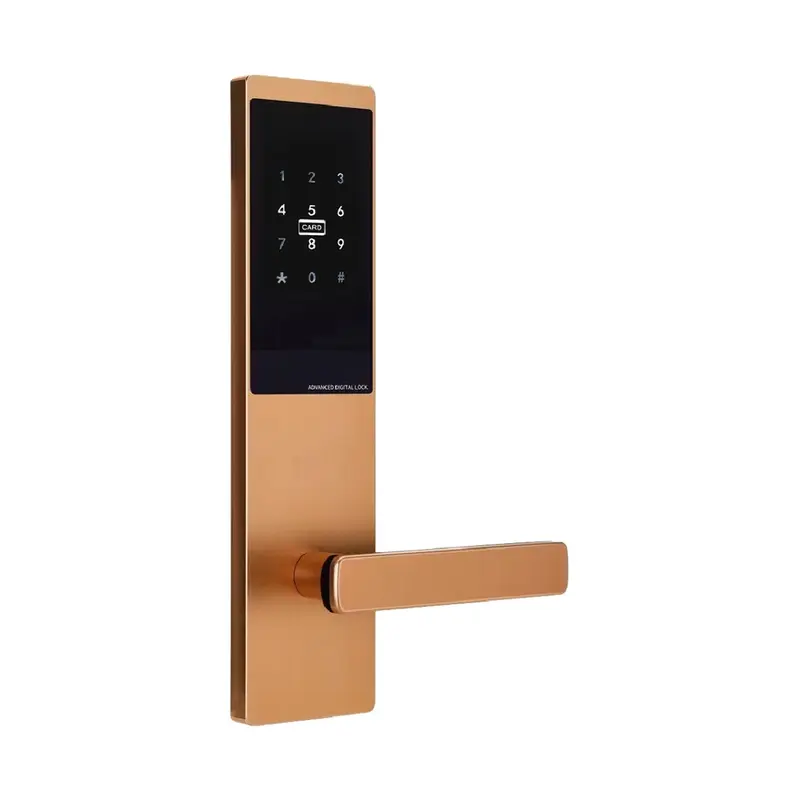
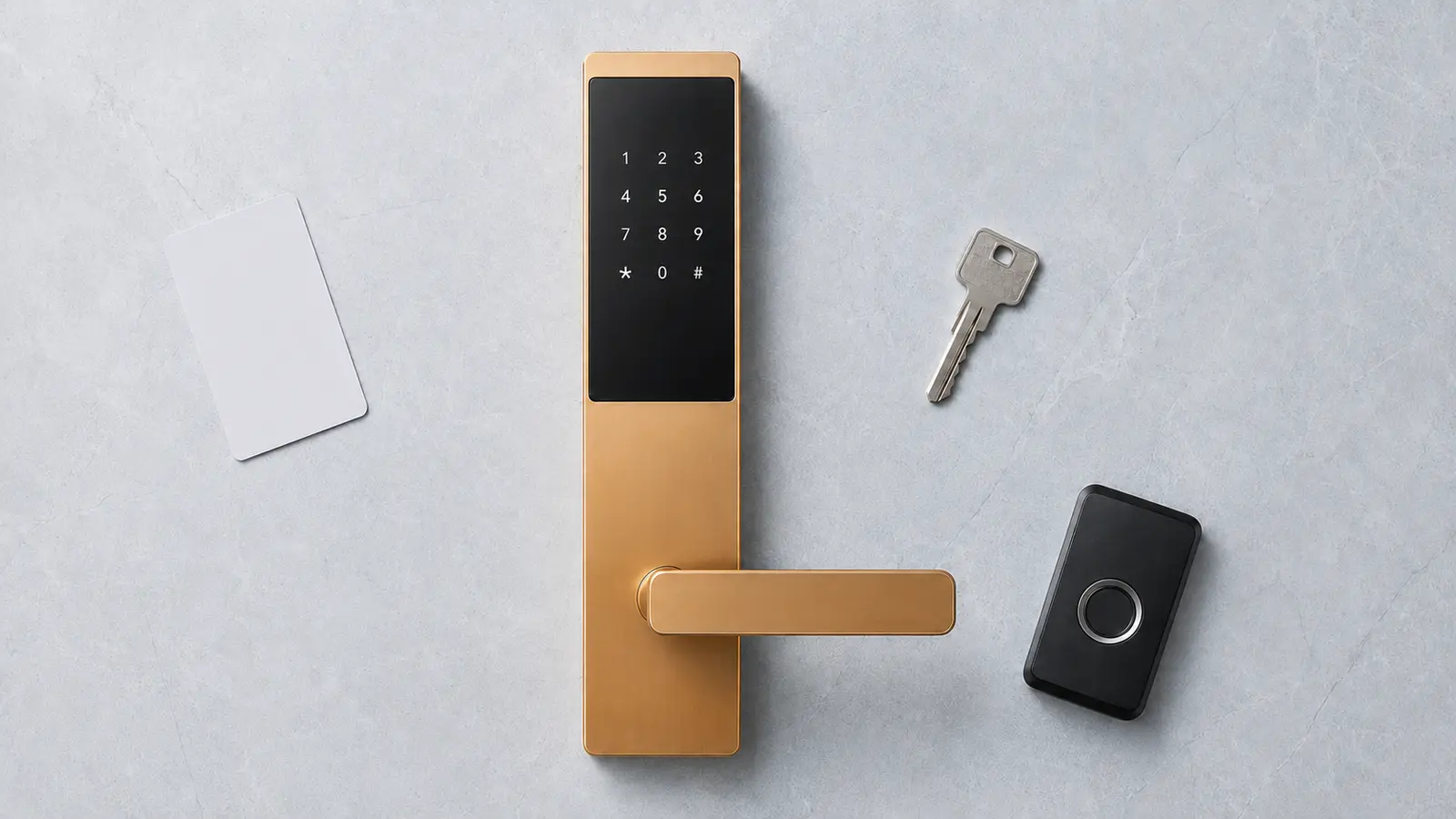
The 2115 Gold Password Lock is listed in Haolock’s product database as a 300 × 75 × 12 mm anodized model made with an aluminum oxide profile for hotels, guesthouses, homestays, schools, and single-lock use. These confirmed physical and application descriptors do not by themselves establish which credential methods, capacities, validity rules, or management components are enabled in the offered version. The quotation and sample review should define those items separately.
Request evidence that connects the buyer’s workflow to the proposed configuration:
- Exact model name, version, finish, dimensions, and lock-body configuration.
- Enabled entry methods and the purpose assigned to each method.
- Credential limits, validity rules, enrollment or issuing process, and revocation process.
- Required cards, encoders, software, administrators, keys, or other components.
- Door compatibility inputs and installation drawings or measurements.
- Sample test record, reset procedure, emergency procedure, and handover documents.
- Bulk identification and acceptance method to prevent configuration mixing.
Representative Scenario: How Could a Mixed Hotel and Apartment Project Choose Methods?
Representative scenario — not a claimed customer case.
Scenario: A property operator manages a small hotel building and an adjacent long-stay apartment building.
Business Background: Hotel guests change frequently and check in at reception. Apartment residents stay for months, while maintenance contractors need occasional access.
Problem: The buyer requests one “keyless lock” configuration for both buildings without defining credential workflows.
Cause: The RFQ compares product features but does not compare issuance, turnover, revocation, and emergency responsibilities.
Solution: The hotel evaluates a card-led guest workflow with controlled staff and emergency access. The apartment evaluates resident passwords, time-bounded contractor access, and a controlled fallback. Both configurations are tested against their own handover checklist.
Buyer Decision Value: The buyer avoids forcing two different operating models into one undefined feature list while retaining a consistent approval and documentation process.
How Should Entry Methods Be Tested at Sample and Handover Stages?
Sample approval should cover every required method and the transition between methods. Test issue or enrollment, valid entry, denied entry, expiry, deletion, lost credential, failed read or input, fallback opening, reset, administrator replacement, and room reassignment. Door fit and installation should be verified separately.
At handover, repeat representative tests on installed rooms and reconcile each door with the approved configuration. The existing guide explaining where swipe card smart locks fit hotel and guesthouse projects provides additional context for buyers evaluating a card-led workflow.
What Should Buyers Include in a Keyless Entry Smart Lock RFQ?
- Property type, room count, user groups, and expected turnover frequency.
- Primary entry method for each user group and the reason for that choice.
- Temporary, recurring, staff, administrator, and emergency access requirements.
- Credential issue, enrollment, extension, deletion, loss, and replacement processes.
- Door material, thickness, opening direction, existing cutout, and lock-body requirements.
- Required cards, keys, issuing equipment, software, documentation, and training.
- Sample test cases, bulk identification, installation checks, and handover records.
The buyer should compare operational cost as well as unit price. Cards require inventory and issuing control; passwords require code governance; fingerprints require enrollment and deletion; keys require physical security. A lower hardware quotation may create a higher operating burden if the credential workflow does not match the property.
Frequently Asked Questions
What is a keyless entry smart lock?
A keyless entry smart lock allows routine entry through an electronic credential such as a password, card, or fingerprint. Some models also retain a mechanical key or another emergency method.
Which entry method is most suitable for hotels?
Hotels often evaluate cards or time-bounded guest credentials because occupants change frequently. The correct method depends on the front-desk workflow, issuing equipment, staff roles, and emergency process.
Which entry method is most suitable for apartments?
Passwords or fingerprints may suit recurring residents, while temporary access can support visitors or contractors. The property must define enrollment, turnover, revocation, and fallback responsibilities.
Can one lock support passwords, cards, fingerprints, and keys?
Some configurations may support several methods, but buyers must verify the exact quoted model and version. Product-family descriptions should not be treated as proof of every function.
Is a mechanical key still necessary on a keyless lock?
A key can provide an independent fallback where the model includes it, but the property must control storage, duplicates, issue records, and lost-key response.
What is the difference between temporary access and a permanent password?
Temporary access has a defined use or validity limit, while a permanent password remains active until changed or deleted. Exact behavior varies by configuration and must be tested.
What should buyers test before bulk ordering?
Test every required entry method, credential creation and deletion, expiry, failure handling, fallback, reset, administrator transfer, door fit, and the records needed for bulk handover.
How Can Buyers Request a Credential-Method Review?
Provide the property type, door count, user groups, turnover pattern, preferred entry methods, temporary-access rules, fallback needs, door measurements, management process, and sample acceptance criteria. Haolock can use these inputs to discuss suitable product and project configurations. Submit the information through the Haolock contact page for an RFQ and configuration review.